

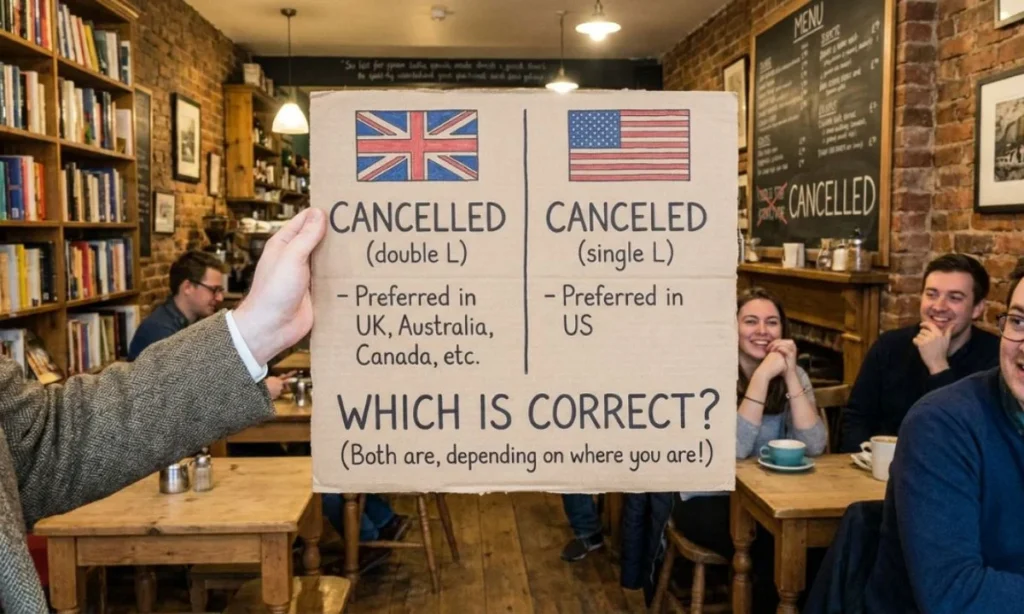
The truth is, both spellings are correct—but their usage depends on where you are and who your audience is. In this comprehensive guide, we’ll explore everything you need to know about “cancelled” vs “canceled,” including their origins, rules for usage, regional differences, and practical tips to help you choose the right spelling every time.
By the end of this article, you’ll never second-guess yourself again when writing this common word. Let’s dive in and settle this spelling debate once and for all.
Most major style guides, including the Associated Press (AP) Stylebook and the Chicago Manual of Style, recommend the single-L spelling for American audiences. Conversely, British publications like The Guardian and The Economist consistently use the double-L spelling.
The good news? Neither spelling will be marked as “wrong” in most contexts, as both are widely recognized and accepted. However, consistency is key—once you choose a spelling, stick with it throughout your document.
Why Cancelled and Canceled Are Both Technically Correct
To understand why both spellings are acceptable, we need to look at the history of English spelling conventions and how they’ve evolved.
The word “cancel” comes from the Latin word “cancellare,” which means “to cross out” or “to make like a lattice.” When English adopted this word, it followed the general rule for adding suffixes to words ending in a consonant-vowel-consonant pattern.
In British English, the rule for doubling the final consonant when adding a suffix is applied more strictly. When the stress falls on the final syllable of the base word, British English typically doubles the consonant. Since “cancel” has stress on the first syllable (CAN-cel), the rule would suggest not doubling the L. However, British English makes an exception for words ending in “L,” doubling it regardless of stress placement.
American English, on the other hand, follows a more streamlined approach. The spelling reform movement in the 19th century, led by figures like Noah Webster, aimed to simplify English spelling and make it more phonetic. Webster advocated for dropping the second “L” in words like “canceled,” “traveled,” and “labeled” to align with the pronunciation and reduce unnecessary letters.
This historical divergence explains why both versions exist today. Neither is inherently “more correct” than the other—they simply reflect different evolutionary paths in the English language.
What Does Cancelled or Canceled Mean

Before diving deeper into the spelling differences, let’s clarify what the word actually means. Both “cancelled” and “canceled” are the past tense and past participle forms of the verb “cancel.”
To cancel means to:
- Decide that something that has been planned or arranged will not happen
- Mark something as invalid or void
- Stop or discontinue something
- Neutralize or offset something else
Common uses of the word include:
- Canceling a meeting or appointment
- Canceling a subscription or service
- Canceling a flight or travel reservation
- Canceling a contract or agreement
- Canceling a check or payment
In recent years, the term has also gained a new cultural meaning through the phenomenon of “cancel culture,” where public figures face social rejection for controversial statements or actions.
Understanding the definition is straightforward—it’s the spelling that trips people up. Let’s explore exactly why that happens and how to navigate this linguistic challenge.
Click Here To Read More:
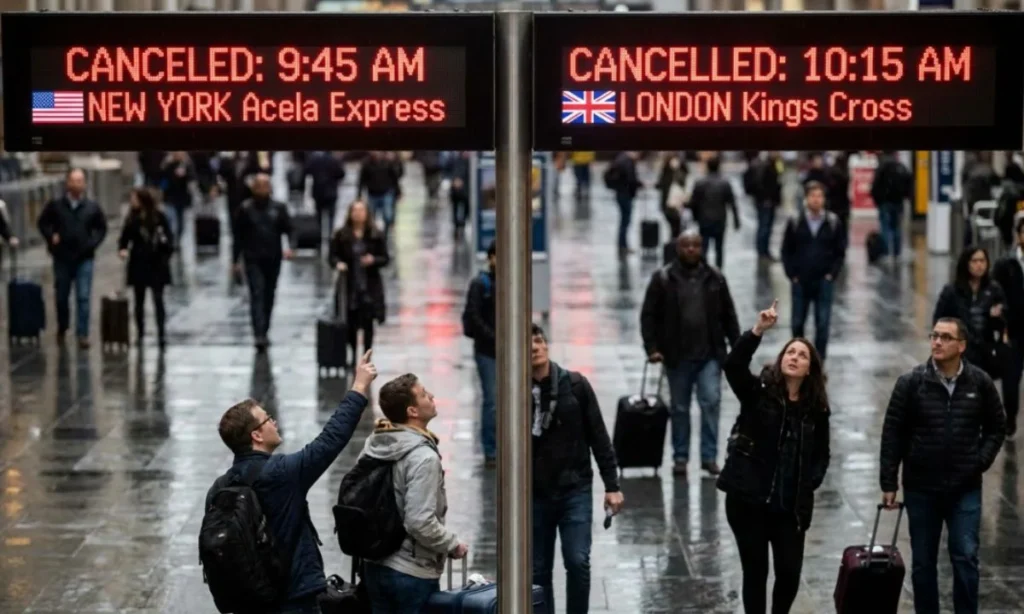
The Difference Between Cancelled and Canceled
Aspect
Cancelled (Double L)
Canceled (Single L)
Primary Usage
British English, Canadian English, Australian English
American English
Rule Applied
Doubling of final consonant for words ending in “L”
Simplified spelling following stress rule
Style Guides
Oxford English Dictionary, British publications
AP Stylebook, Chicago Manual of Style
Other Similar Words
Travelled, labelled, modelled
Traveled, labeled, modeled
Global Recognition
Recognized worldwide but seen as “British”
Recognized worldwide but seen as “American”
The core difference lies in the number of L’s—two for British English and one for American English. This pattern extends to other words ending in “L” as well, such as:
- Travelled (British) vs Traveled (American)
- Labelled (British) vs Labeled (American)
- Modelled (British) vs Modeled (American)
- Fuelled (British) vs Fueled (American)
Understanding this pattern can help you remember the correct spelling for various contexts. If you’re writing for an American audience, use one L. For a British, Australian, or Canadian audience, use two L’s.
So Which One Should You Write?
Choosing between “cancelled” and “canceled” comes down to answering a few key questions:
1. Who is your audience?
- If you’re writing for an American audience or publication, use “canceled”
- If you’re writing for a British, Australian, Canadian, or international audience, use “cancelled”
2. What style guide are you following?
- AP Style, Chicago Style, and most American publications prefer “canceled”
- Oxford Style and British publications prefer “cancelled”
3. Where is your content being published?
- American websites and blogs: “canceled”
- British or European websites: “cancelled”
- Global websites with mixed audiences: Choose one and be consistent
4. What’s your personal preference or brand style?
- Some brands choose a specific spelling and stick with it across all content
- Consider your company’s location and target market
In practical terms, if you’re an American writing for an American audience, “canceled” is your best bet. If you’re British or writing for a British publication, “cancelled” is the way to go.
When in doubt, consider your audience. In the digital age, American English dominates much of the internet, so “canceled” is more commonly seen online. However, this doesn’t make “cancelled” incorrect—it simply means you should be mindful of your readers’ expectations.
Cancelled vs Canceled in British and American English
Understanding the broader context of British vs American English spelling differences can help you remember which version to use.
British English (Cancelled)
British English tends to preserve more traditional spelling patterns, often retaining extra letters that have been dropped in American English. This includes:
- Doubled L’s in words ending with “L” (cancelled, travelled, labelled)
- “O-U” in words like colour, favour, honour
- “R-E” endings in words like centre, theatre, metre
- “I-S-E” endings in words like organise, realise, recognise
The British approach to spelling is generally more conservative and reflects the word’s historical origins more closely.
American English (Canceled)
American English spelling reforms, particularly those championed by Noah Webster in the early 19th century, aimed to simplify and standardize spelling. Key features include:
- Single L’s in words ending with “L” (canceled, traveled, labeled)
- “O” without the “U” in words like color, favor, honor
- “E-R” endings in words like center, theater, meter
- “I-Z-E” endings in words like organize, realize, recognize
Webster believed that simpler spelling would make English easier to learn and use. His reforms were largely adopted in American education and publishing, creating the distinct differences we see today.
When Should You Use “Cancelled”?
Use “cancelled” (with two L’s) in the following situations:
- Writing for a British audience (UK, England, Scotland, Wales, Northern Ireland)
- Writing for Commonwealth countries (Canada, Australia, New Zealand, South Africa, India)
- Following British style guides (Oxford English Dictionary, The Guardian style guide)
- Publishing in British publications (The Times, The BBC, The Economist)
- Writing in academic contexts where British English is preferred
- Creating content for international audiences where British English is the standard
Examples of proper usage:
- “The concert was cancelled due to heavy rain.”
- “Our flight to London has been cancelled.”
- “She cancelled her gym membership yesterday.”
- “The government cancelled the project after budget concerns.”
- “I cancelled my subscription to the magazine.”
Remember that Canadian English typically follows British spelling conventions, but Canadian writers often use a mix of both systems. For Canadian publications, “cancelled” is generally preferred, though American influences are becoming more common.
When Should You Use “Canceled”?
Use “canceled” (with one L) in the following situations:
- Writing for an American audience (United States)
- Following American style guides (AP Stylebook, Chicago Manual of Style)
- Publishing in American publications (The New York Times, The Washington Post, USA Today)
- Writing for global audiences where American English is the standard
- Creating content for most digital platforms (social media, blogs, websites)
- Using American English spell-check settings
Examples of proper usage:
- “The game was canceled because of the storm.”
- “The airline canceled all flights to the East Coast.”
- “We canceled our dinner reservations.”
- “The meeting was canceled at the last minute.”
- “My credit card was canceled after suspicious activity.”
For American writers, “canceled” is the clear choice. It’s the spelling taught in American schools and used in virtually all American publications. Using “cancelled” in American writing might appear foreign or unprofessional, especially in formal contexts.
Why Does “Cancelled” Have Two L’s?
The double L in “cancelled” follows a specific rule in English grammar: when adding a suffix beginning with a vowel (like -ed or -ing) to a word ending in a consonant-vowel-consonant pattern, the final consonant is doubled.
Here’s how it works:
- The base word is cancel (ends with consonant-vowel-consonant: C-A-N-C-E-L)
- When adding the suffix -ed, the final consonant (L) is doubled
- This creates cancelled
This rule applies consistently in British English for words ending in “L,” regardless of where the stress falls. Other examples include:
- Travel → Travelled
- Label → Labelled
- Model → Modelled
- Fuel → Fuelled
- Signal → Signalled
British English treats the final “L” as eligible for doubling even when the stress is on the first syllable. This approach is more comprehensive and applies to virtually all words ending in “L” that take a vowel suffix.
The rule might seem confusing at first, but once you understand the pattern, it becomes second nature. British English simply applies the doubling rule more broadly than American English.
Why Does American English Use “Canceled”?
American English uses “canceled” with a single L because of a different application of the doubling rule. In American English, the final consonant is doubled only when the stress falls on the final syllable.
Let’s break this down:
- Cancel has stress on the first syllable: CAN-cel
- Since the stress isn’t on the final syllable, the “L” is not doubled
- The result is canceled
This rule applies to many other words in American English:
- Travel (TRAV-el) → Traveled (not Travelled)
- Label (LA-bel) → Labeled (not Labelled)
- Model (MOD-el) → Modeled (not Modelled)
- Fuel (FU-el) → Fueled (not Fuelled)
Compare this to words where the stress is on the final syllable:
- Control (con-TROL) → Controlled (double L)
- Patrol (pa-TROL) → Patrolled (double L)
- Compel (com-PEL) → Compelled (double L)
- Excel (ex-CEL) → Excelled (double L)
In these examples, the stress is on the final syllable, so American English doubles the final consonant, just like British English would.
This systematic approach makes American English more phonetic and predictable. The spelling directly reflects the pronunciation and stress patterns of the word.
Add to Your Grammar Knowledge One Fun Article at a Time
Mastering English grammar doesn’t have to be boring. Understanding the nuances of spelling, punctuation, and usage can actually be quite fascinating when you approach it with curiosity.
Here are some other common spelling differences between British and American English that follow similar patterns:
British English
American English
Example Sentence
Fulfil
Fulfill
She fulfilled her dream of becoming a doctor.
Enrol
Enroll
He enrolled in the university program.
Skilful
Skillful
The skillful artist impressed everyone.
Wilful
Willful
The willful child refused to listen.
Jewellery
Jewelry
She wore expensive jewelry to the party.
Interestingly, some words that follow this pattern have both spellings accepted even in American English, particularly when the word has multiple syllables:
- Appalling (both spellings are commonly accepted)
- Equalling (British) vs Equaling (American)
- Quarrelling (British) vs Quarreling (American)
The key to mastering these differences is exposure and practice. The more you read from both British and American sources, the more naturally you’ll recognize which spelling is appropriate for your context.
Examples of Cancelled and Canceled in Sentences
To help you visualize the difference in context, here are numerous examples of both spellings used in complete sentences.
Examples of “Cancelled” (British English)
- “The outdoor concert was cancelled when the stage collapsed in the storm.”
- “Due to unforeseen circumstances, all train services to Manchester have been cancelled.”
- “My son’s football match was cancelled because the pitch was waterlogged.”
- “The company cancelled the project after running out of funding.”
- “I cancelled my appointment with the dentist when I caught the flu.”
- “The festival has been cancelled for the second year in a row.”
- “The director cancelled the rehearsal to give the cast a break.”
- “The school trip was cancelled due to a lack of volunteers.”
- “She cancelled her magazine subscription last month.”
- “The government cancelled the contract after discovering irregularities.”
Examples of “Canceled” (American English)
- “The outdoor concert was canceled when the stage collapsed in the storm.”
- “Due to unforeseen circumstances, all train services to Chicago have been canceled.”
- “My son’s soccer game was canceled because the field was waterlogged.”
- “The company canceled the project after running out of funding.”
- “I canceled my appointment with the dentist when I caught the flu.”
- “The festival has been canceled for the second year in a row.”
- “The director canceled the rehearsal to give the cast a break.”
- “The school trip was canceled due to a lack of chaperones.”
- “She canceled her magazine subscription last month.”
- “The government canceled the contract after discovering irregularities.”
Notice that the sentences are identical except for the spelling of the word. This demonstrates that the choice is purely a matter of style and regional convention.
4 Responses to “Cancelled or Canceled: Which Is Correct?”
Here are common questions and responses people often have about this spelling dilemma:
1. “I’m confused—my spell-check says both are correct!”
That’s because both spellings are technically correct! Your spell-check program likely recognizes both American and British English variants. The choice depends on your audience and location, not on which is “right” or “wrong.”
2. “I’m American, but I prefer the look of ‘cancelled’—can I use it?”
You certainly can, but it may mark you as someone who uses British spellings. If you’re writing for an American audience, stick with “canceled” to maintain consistency and professionalism.
3. “Does this rule apply to all words ending in ‘L’?”
Yes, but with a catch! British English doubles the “L” for all words ending in “L” when adding a vowel suffix. American English only doubles the “L” when the stress is on the final syllable.
4. “Will people judge my writing based on which spelling I choose?”
Most readers won’t notice or care unless they’re editors, teachers, or language enthusiasts. However, consistency is more important than which spelling you choose—pick one and stick with it throughout your document.
FAQs
Is “cancelled” or “canceled” more common globally?
“Canceled” is more common globally due to the widespread influence of American English on the internet and in international business. However, “cancelled”.
Can I use both spellings in the same document?
While you technically can, it’s not recommended. Mixing both spellings in a single document can appear inconsistent and unprofessional.
Does the rule apply to other forms of the word like “canceling” and “cancellation”?
Yes and no. “Canceling” and “cancelled” follow the same L-doubling rules. However, “cancellation” always has two L’s in both American and British English.
What about “cancelation” with one L?
“Cancelation” with one L is rarely used and generally considered nonstandard. Even in American English, “cancellation” with two L’s is the preferred and standard spelling for the noun form.
Is “cancelled” ever used in American English?
Yes, it appears in American writing, especially in older texts or when writers choose to adopt British spelling conventions.
Does Microsoft Word or Google Docs flag one as incorrect?
It depends on your language settings. If you set your language to English (US), “canceled” is accepted and “cancelled” may be flagged. If you set it to English (UK), the opposite occurs.
Conclusion
The “cancelled vs canceled” debate is one of those fascinating quirks of the English language that demonstrates how spelling conventions evolve differently across regions. The good news is that both spellings are correct—the choice simply depends on where you are and who you’re writing for.
The most important takeaway isn’t which spelling is “correct,” but rather understanding your audience and writing for them. Whether you choose “cancelled” or “canceled,” what matters most is clarity, consistency, and effective communication.
Next time you’re about to write this word, take a moment to consider your reader. Are they in London or Los Angeles? Reading The Guardian or The New York Times? Your answer will guide you to the right spelling.
Mastering these small details might seem trivial, but they’re the hallmarks of a careful, thoughtful writer. And isn’t that what we all aspire to be?
