


Fruits that begin with the letter Z are among the rarest in the botanical world. While most people can quickly name fruits starting with A, B, or C, the letter Z presents a genuine challenge. This scarcity makes these fruits fascinating to explore—each one carries a unique story, distinct flavor profile, and often surprising health benefits.
This comprehensive guide covers 19 fruits that start with Z, from the familiar zucchini to exotic varieties like zhe fruit and zapote. You’ll discover what they look like, how they taste, where they come from, and why they deserve a spot in your culinary vocabulary.
Complete List of Fruits That Start With Z

Here is the full list of Z-named fruits covered in this guide. Some are true botanical fruits, others are culinary staples treated as vegetables, and several are grape varieties prized for winemaking.
- Zante Currant
- Zapote (Mamey Sapote)
- Zarzamora (Blackberry)
- Zestar Apple
- Zhe Fruit (Che Fruit)
- Zill Mango
- Zinfandel Grape
- Ziziphus (Jujube)
- Ziziphus jujuba (Chinese Jujube)
- Ziziphus mauritiana (Indian Jujube/Ber)
- Zucchini
- Zweigelt Grape
- Zwetschge (European Plum)
Pictures and Fun Facts of Fruits That Start With Z
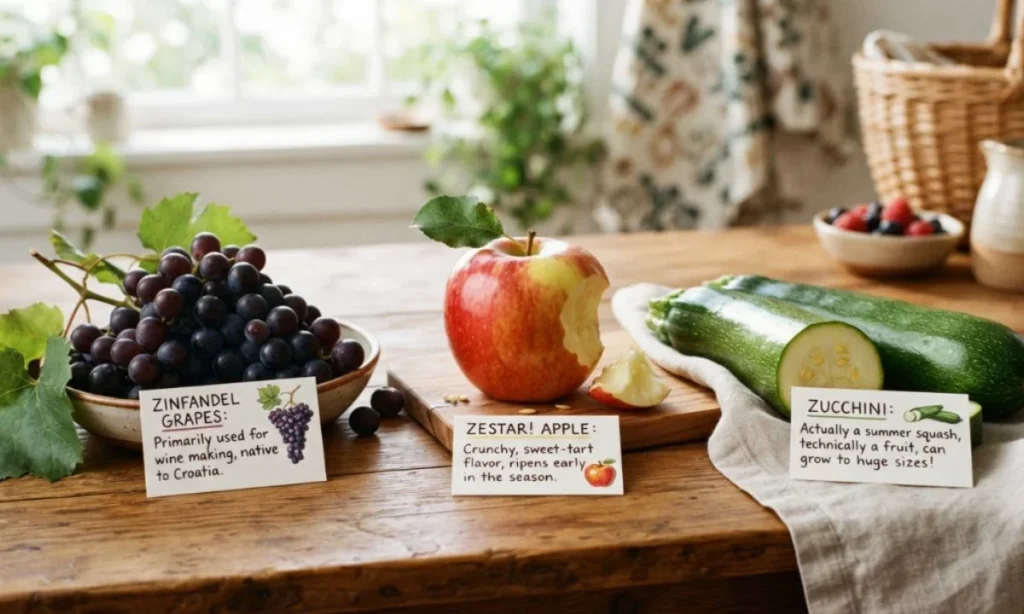
Explore how these fruits look and learn short, interesting facts that make them easier to remember. Discover fruits that begin with Z and improve your vocabulary.
Click Here To Read More:
Zante Currant
Scientific Name: Vitis vinifera (Black Corinth grape)
Zante currants are tiny, dark, seedless grapes dried into currants. They have a sweet, slightly tangy taste with a rich, concentrated flavor.
Uses and Benefits: Used in baking (cakes, buns) and salads; rich in antioxidants, fiber, and iron, helping digestion and boosting energy.
Fun Fact: Despite their name, Zante currants are not related to black, red, or white currants—they are simply raisins made from a specific grape variety. The name comes from the Ionian island of Zakynthos (Zante) and the Greek city of Corinth, which was once a major exporter.
Zapote (Mamey Sapote)
Scientific Name: Pouteria sapota
Zapote is a tropical fruit with soft orange flesh and a creamy, sweet taste similar to pumpkin and sweet potato. Its texture is smooth and dessert-like.
Uses and Benefits: Used in smoothies, desserts, and ice creams; high in vitamins A and C, supports immunity and healthy skin.
Fun Fact: The word “sapote” comes from the Nahuatl word tzapotl. Mamey sapote trees can grow up to 40 meters tall, and the fruit can weigh over two pounds. The seed kernel oil is used in traditional remedies to prevent hair loss.
Zarzamora (Blackberry)
Scientific Name: Rubus fruticosus
Zarzamora, or blackberry, is a juicy berry with a sweet yet slightly tart flavor. It has a soft texture with tiny edible seeds.
Uses and Benefits: Used in jams, juices, and desserts; rich in antioxidants and vitamin C, supports heart health and fights inflammation.
Fun Fact: In Spanish, “zarzamora” is the common name for the blackberry fruit and the thorny bramble bush it grows on. Unlike true berries, blackberries are technically an aggregate fruit made up of many small drupes.
Zestar Apple
Scientific Name: Malus domestica
Zestar apples are crisp and juicy with a balanced sweet-tart taste and a hint of brown sugar flavor. They are refreshing and aromatic.
Uses and Benefits: Great for fresh eating and baking; provides fiber and vitamin C, aiding digestion and boosting immunity.
Fun Fact: The Zestar! apple was introduced in 1999 by the University of Minnesota and is known for its cold hardiness and high fruit quality. Sensory evaluation panels have rated it as among the best-tasting early-season apples.
Zhe Fruit
Scientific Name: Cudrania tricuspidata (also known as Maclura tricuspidata)
Zhe fruit is a small, red fruit with a soft texture and mildly sweet flavor, somewhat like a mix of fig and mulberry.
Uses and Benefits: Eaten fresh or used in traditional remedies; contains antioxidants and may support blood circulation and overall wellness.
Fun Fact: Also called che fruit, Mandarin melon berry, and cudrang, this East Asian fruit resembles a raspberry but has more geometric sections. When the trees are young, they have thorns—but as they mature, the thorns disappear.
Zill Mango
Scientific Name: Mangifera indica
Zill mango is a juicy, tropical mango variety known for its rich sweetness and slight tanginess. Its flesh is smooth and fiberless.
Uses and Benefits: Used in juices, desserts, and fresh slices; high in vitamin A and C, promotes eye health and immunity.
Fun Fact: The Zill mango originated from a seed planted in 1922 in Florida and was named after horticulturist Laurence H. Zill. Its flavor is often compared to pineapple, and it has a strong, distinctive aroma.
Zinfandel Grape
Scientific Name: Vitis vinifera
Zinfandel grapes are medium-sized with a sweet, slightly spicy flavor. They are juicy and often used in winemaking.
Uses and Benefits: Used for fresh eating and wine production; contains antioxidants like resveratrol, supporting heart health.
Fun Fact: DNA analysis has proven that Zinfandel, Italian Primitivo, and Croatian Tribidrag are actually the same grape variety! Zinfandel grapes ripen to an unusually high sugar concentration, which is why wines made from them routinely exceed 15% alcohol.
Ziziphus (Jujube Fruits)
Scientific Name: Ziziphus spp.
Jujube fruits are small and round with a crisp apple-like texture when fresh and a chewy, date-like sweetness when dried.
Uses and Benefits: Used in teas and snacks; rich in vitamin C and natural sugars, helps improve sleep and digestion.
Fun Fact: The genus Ziziphus includes around 40 species of spiny shrubs and small trees, many of which produce edible fruits. The name comes from the Greek word zizyphon, which referred to the jujube tree.
Ziziphus jujuba (Chinese Jujube)
Scientific Name: Ziziphus jujuba
Also called Chinese jujube, this fruit has a mild sweetness with a crunchy texture when fresh and chewy when dried.
Uses and Benefits: Used in herbal medicine and teas; supports immunity, reduces stress, and improves sleep quality.
Fun Fact: Chinese jujube has been cultivated for over 4,000 years. The fruit contains significant amounts of vitamin C—around 135 mg per 100 grams—and is rich in minerals like calcium and potassium.
Ziziphus mauritiana (Indian Jujube/Ber)
Scientific Name: Ziziphus mauritiana
Known as Indian jujube (ber), it has a sweet-sour taste with a crisp or slightly spongy texture depending on ripeness.
Uses and Benefits: Eaten fresh or dried; rich in vitamin C, aids digestion and strengthens the immune system.
Fun Fact: This species is native to tropical Asia and is widely cultivated in India and Pakistan. The fruit is ovoid, about 2.5–3.5 cm long, and generally yellowish-green when ripe.
Zucchini
Scientific Name: Cucurbita pepo
Zucchini is a mild-flavored, slightly sweet vegetable often treated as a fruit botanically. It has a soft texture when cooked.
Uses and Benefits: Used in cooking (stir-fries, baking); low in calories, high in water and fiber, supports weight management and hydration.
Fun Fact: Scientifically, zucchini is a fruit—specifically, a botanical berry called a pepo. The word “zucchini” comes from the Italian zucca, meaning “gourd”. It is harvested young; if allowed to mature, it becomes a large marrow-like vegetable.
Zweigelt Grape
Scientific Name: Vitis vinifera
Zweigelt grapes are dark blue-almost-black berries used to produce a deep red wine. They ripen early and produce large, heavy clusters.
Uses and Benefits: Used primarily in winemaking; contains antioxidants typical of red grape varieties.
Fun Fact: This Austrian grape variety was created in 1922 by Friedrich Zweigelt. It is a cross between St. Laurent and Blaufränkisch grapes and is now widely planted in Austria, Canada, and Central Europe.
Zwetschge (European Plum)
Zwetschge is a type of European plum with a distinctive elongated shape and sweet-tart flavor. It is commonly used for drying into prunes and making jams.
Uses and Benefits: Eaten fresh, dried as prunes, or used in baking; rich in fiber, potassium, and vitamin K, supporting digestion and bone health.
Fun Fact: Zwetschge is the German word for a specific type of plum (Prunus domestica subsp. domestica). It is a key ingredient in traditional German desserts like Zwetschgenkuchen (plum cake).
Tropical Fruits That Start With Z
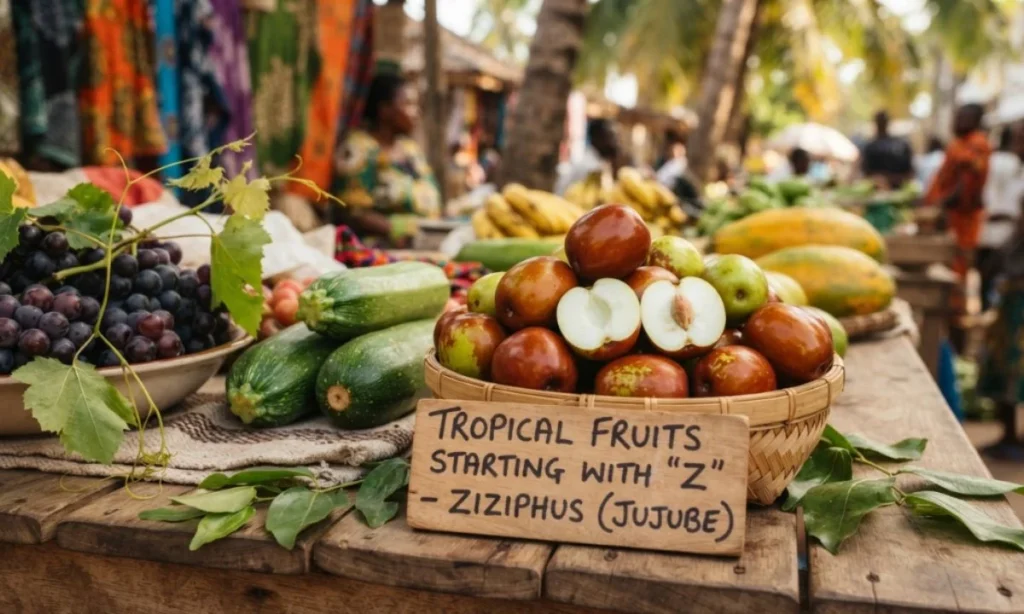
The tropical and subtropical regions of the world harbor several Z-named fruits that are worth knowing about:
- Zapote (Mamey Sapote): Native to Mexico and Central America, this tropical fruit has creamy orange flesh and a sweet flavor reminiscent of sweet potato and pumpkin.
- Zill Mango: A Florida-bred mango variety with fiberless, aromatic flesh.
- Ziziphus mauritiana (Ber): Widely grown across tropical Asia, particularly in India and Pakistan.
These fruits thrive in warm, humid climates and are often enjoyed fresh or in traditional desserts and beverages.
Rare and Exotic Z Fruits You Should Know
Beyond the more common entries, several rare fruits add uniqueness to this list:
- Zhe Fruit: A rarely cultivated East Asian fruit with a taste between fig and mulberry. It grows on thorny trees that lose their spines with age.
- Zante Currant: While common in baking, few people realize these are actually dried grapes from a specific Greek cultivar.
- Zwetschge: Less known outside Central Europe, this elongated plum variety is prized for its concentrated flavor and versatility.
These fruits may not be supermarket staples, but they each contribute something special to the diverse world of fruits.
FAQs
Are all fruits that start with Z easy to find in grocery stores?
No, most are rare or regional specialties found in specialty markets or specific growing regions.
Is zucchini really a fruit?
Yes, botanically zucchini is a fruit because it develops from a flower and contains seeds.
What do Zante currants taste like?
They have a sweet, slightly tangy flavor with a rich, concentrated taste.
Where do Zestar apples come from?
They were developed by the University of Minnesota and released in 1999.
What is the most popular fruit that starts with Z?
Zucchini is the most widely recognized and consumed fruit on this list.
Conclusion
The world of fruits that start with Z is surprisingly diverse. From the everyday zucchini to the rare zhe fruit, each entry offers unique flavors, textures, and nutritional benefits. While many of these fruits require a trip to a specialty market or growing region to experience fresh, they all contribute to the rich tapestry of global fruit culture.
Understanding these lesser-known fruits expands culinary vocabulary and opens doors to new taste experiences. Whether you’re a food enthusiast, a quiz lover, or simply curious about the natural world, the letter Z has more to offer than meets the eye.
