

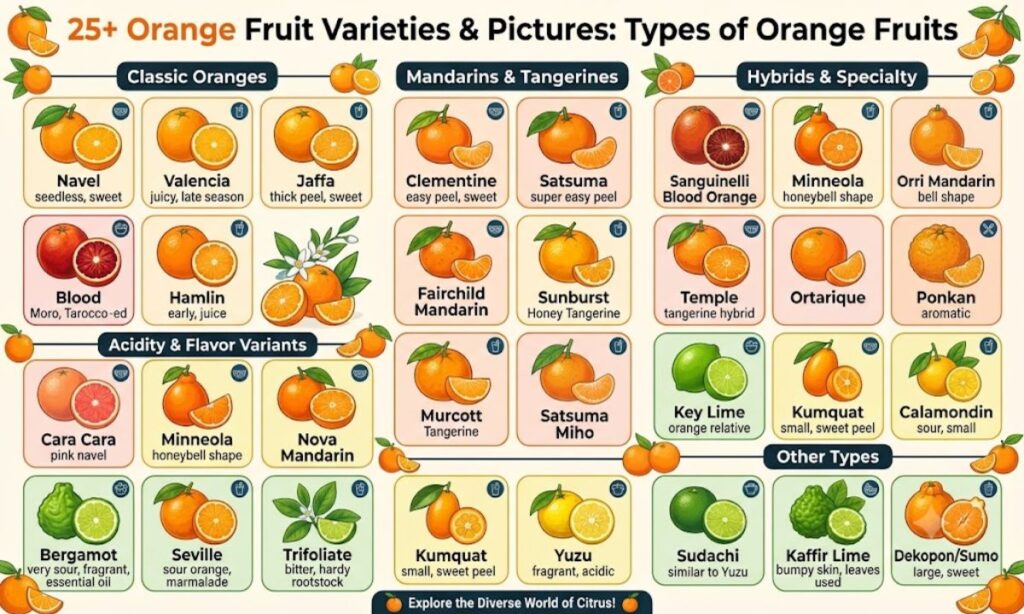
Oranges seem simple at first glance — round, orange, sweet. But step into any well-stocked grocery store or farmers market and you’ll find dozens of distinct varieties, each with its own flavor profile, texture, and best use. Some are perfect for juicing, others for peeling and eating fresh, and a few are prized purely for their striking color.
This guide breaks down over 25 orange fruit varieties with pictures, covering everything from everyday navel oranges to rare blood orange types. Whether you’re a home cook, a student researching citrus fruits, or just curious about what’s really in your fruit bowl, you’ll walk away knowing exactly how to tell one orange from another.
What is an Orange Fruit?
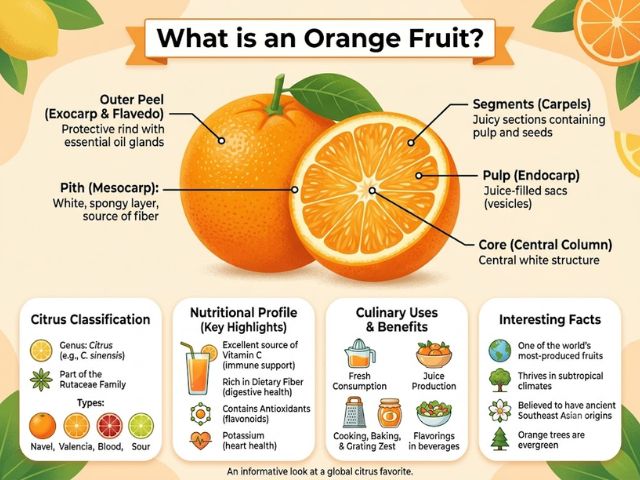
The orange is a citrus fruit believed to be a hybrid between the pomelo and the mandarin, cultivated for thousands of years before spreading from Asia to the Mediterranean and eventually the Americas. Botanically, oranges belong to the genus Citrus, and they’re broadly split into two major groups:
Sweet oranges (Citrus sinensis) — the type most people eat fresh or juice
Bitter oranges (Citrus aurantium) — used mainly for marmalade, zest, and flavoring
Oranges grow on evergreen trees in warm, subtropical climates and are harvested once mature, since unlike some fruits, they don’t continue ripening after being picked.
Benefits of Eating Orange Fruits
Oranges aren’t just refreshing — they’re genuinely good for you. Here’s what a regular serving brings to the table:
Rich in vitamin C — supports immune function and skin health
High in fiber — especially when eaten whole rather than juiced
Contains antioxidants — including flavonoids that support heart health
Hydrating — oranges are roughly 87% water
Low in calories — a satisfying snack without a heavy calorie load
Supports digestion — natural fiber content aids gut health
May help lower cholesterol — thanks to soluble fiber and plant compounds
Types of Orange Fruit With Names and Images
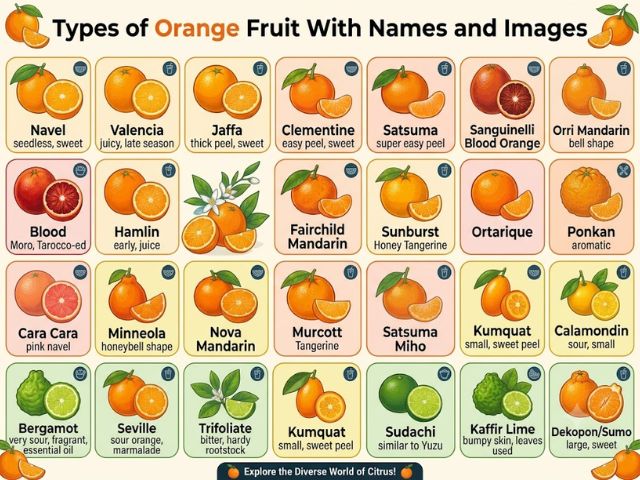
Let’s go variety by variety, starting with the most familiar types you’ll find at any supermarket.
Navel Orange
The Washington Navel is the most widely recognized orange in the world, known for its seedless flesh, easy-peel skin, and the distinctive “belly button” formation at the base — a small secondary fruit that gives it its name.
Valencia Orange
Valencia oranges are prized for juicing thanks to their high juice content and balanced sweetness. They’re typically available later in the season, filling the gap after navel season ends.
Blood Orange
Blood oranges get their deep red flesh from anthocyanins, the same pigments found in berries. Popular sub-varieties include Moro, Tarocco, and Sanguinello, each with slightly different sweetness and color intensity.
Cara Cara Orange
Sometimes called the “red navel,” Cara Cara oranges have pink-red flesh with a sweeter, slightly berry-like flavor compared to a standard navel, and lower acidity.
Hamlin Orange
A popular Florida-grown variety, Hamlin oranges are thin-skinned, nearly seedless, and mature early in the season, making them a favorite for early-harvest juice production.
Jaffa Orange
Originating in Israel, Jaffa oranges are known for their tough, easy-to-peel skin and sweet, low-seed flesh, making them popular for export and long-distance shipping.
Seville Orange
This bitter orange variety isn’t eaten fresh — it’s the classic choice for marmalade thanks to its tart, tangy flavor and high pectin content.
Pineapple Orange
Despite the name, Pineapple oranges don’t taste like pineapple. The name comes from a subtle tropical aroma. They’re sweet, juicy, and contain a moderate number of seeds.
Citrus Types Commonly Called Oranges
Some citrus fruits carry “orange” in their common name but aren’t technically classified as true oranges. It helps to know the difference:
| Fruit | Related to Orange? | Key Trait |
| Mandarin | Parent species of the orange | Small, sweet, loose-skinned |
| Tangerine | A type of mandarin | Deep orange color, easy to peel |
| Clementine | A mandarin hybrid | Seedless, very sweet |
| Tangelo | Tangerine x grapefruit | Juicy, slightly tart |
| Kumquat | Distantly related citrus | Small, edible peel |
| Bergamot | A true orange variety | Bitter, used in earl grey tea and perfume |
Image unavailable
storage.googleapis
storage.googleapis
Orange Fruits List from A to Z with Images
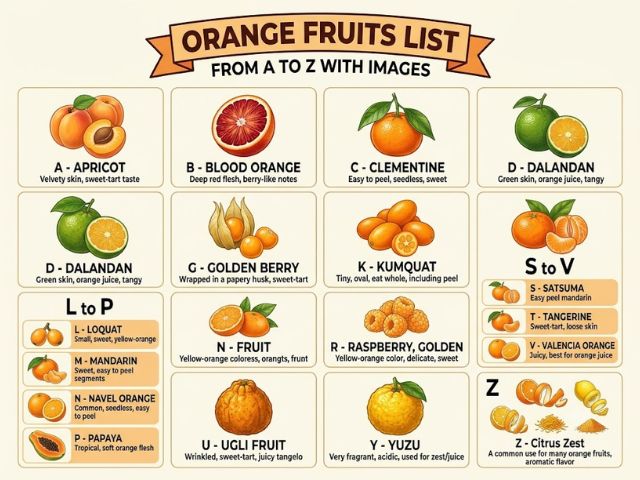
Here’s a broader alphabetical reference of orange and orange-related citrus varieties commonly discussed alongside true oranges:
Ambersweet — a low-acid hybrid orange popular in Florida
Bergamot — bitter, aromatic, used in tea and fragrance
Blood Orange — red-fleshed, berry-like sweetness
Cara Cara — pink flesh, low acidity
Clementine — small, seedless mandarin hybrid
Hamlin — early-season juicing orange
Homosassa — historic Florida variety, sweet flavor
Jaffa — thick-skinned export favorite
Kumquat — tiny citrus, edible peel
Maltese — Mediterranean blood orange type
Mandarin — small, loose-skinned, sweet
Moro — deep-red blood orange variety
Navel — seedless, easy-peel classic
Pineapple Orange — sweet, aromatic, mid-season
Sanguinello — Sicilian blood orange
Satsuma — cold-hardy mandarin type
Seville — bitter, marmalade-grade
Tangelo — tangerine-grapefruit hybrid
Tangerine — deep orange mandarin variety
Tarocco — Italian blood orange, mild flavor
Valencia — high-juice, late-season classic
Washington Navel — the original modern navel orange
Read More…50+ Types of Construction Vehicles with Names and Pictures
Best Orange Fruits for Juice
Not every orange is ideal for juicing. Juice quality depends on juice content, sweetness, and seed count.
| Orange Variety | Why It’s Great for Juice |
| Valencia | High juice yield, balanced sweetness |
| Hamlin | Thin skin, minimal seeds, early season |
| Jaffa | Sweet and consistent juice output |
| Pineapple Orange | Aromatic, moderately sweet juice |
| Blood Orange | Adds color and berry-like depth |
Which Orange Variety Is the Sweetest?
Among common varieties, Cara Cara and Honeybell (Minneola tangelo) oranges are frequently cited as the sweetest, thanks to their low acidity and high natural sugar content. Blood oranges also rank high in sweetness, with a berry-like complexity that sets them apart from standard sweet oranges.
How to Choose Fresh Orange Fruits
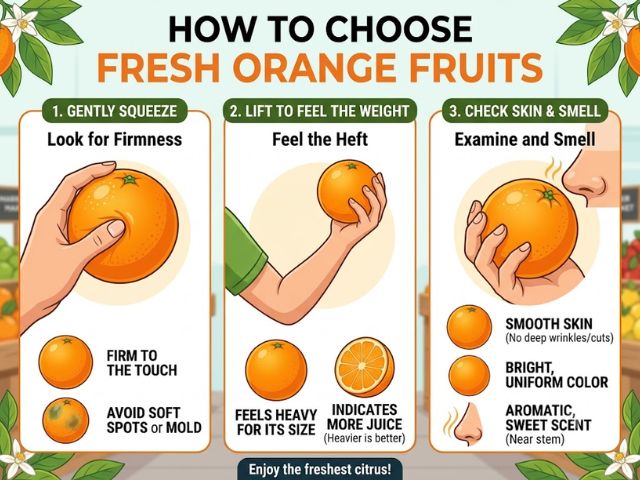
Picking a good orange isn’t about color alone — some of the sweetest oranges have slightly dull or greenish skin.
Feel the weight — a heavier orange usually means more juice
Check firmness — it should feel firm, not soft or spongy
Smell the peel — a fresh, citrusy aroma is a good sign
Avoid soft spots or mold — these indicate spoilage
Don’t judge by color alone — some ripe oranges keep a slightly green tint
Nutritional Value of Orange Fruits
A medium-sized orange (about 130g) typically provides:
| Nutrient | Approximate Amount |
| Calories | 60–65 kcal |
| Vitamin C | ~70 mg (well over 100% Daily Value) |
| Fiber | 3 grams |
| Sugar | 12 grams (naturally occurring) |
| Potassium | 240 mg |
| Folate | 40 mcg |
Health Benefits of Different Orange Varieties
Blood oranges — extra antioxidants from anthocyanins, may support heart health
Navel oranges — high fiber content supports digestion
Valencia oranges — excellent vitamin C source due to high juice content
Cara Cara oranges — lower acidity, gentler on sensitive stomachs
Seville oranges — high pectin content, though typically consumed in small amounts as marmalade
Popular Orange Fruits Around the World
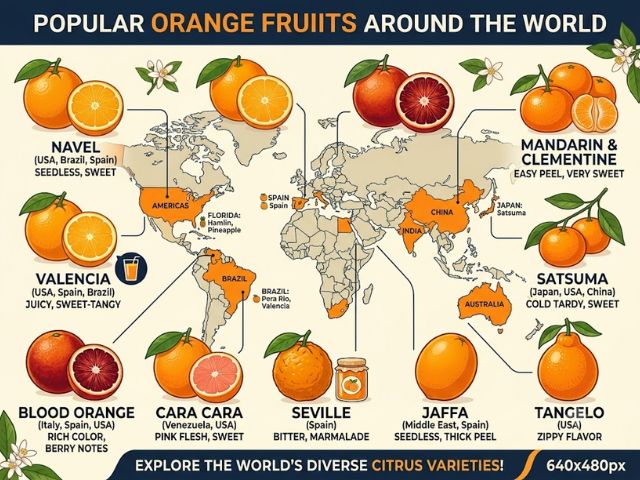
United States — Navel and Valencia dominate California and Florida production
Spain — known for Valencia and Navelina oranges
Italy — home to prized blood orange varieties like Tarocco and Moro
Israel — Jaffa oranges remain a major export
Brazil — one of the world’s largest orange juice producers, primarily Valencia and Pera
China — widely grows mandarins and sweet oranges for domestic consumption
Seasonal Availability of Orange Fruits
| Season | Common Varieties Available |
| Late Fall to Winter | Navel, Clementine, Satsuma |
| Winter to Early Spring | Cara Cara, Blood Orange, Tangelo |
| Spring to Early Summer | Valencia |
| Year-round (imported) | Standard sweet oranges |
FAQs
What is the sweetest orange variety?
Cara Cara and Honeybell oranges are generally considered among the sweetest due to their low acidity.
Are blood oranges genetically different from regular oranges?
Blood oranges are a natural mutation of sweet oranges, not a separate species, caused by anthocyanin pigment production.
Is a mandarin the same as an orange?
No, mandarins are a related but distinct citrus fruit and are actually one of the parent species of the orange.
Which orange is best for juicing?
Valencia oranges are widely considered the best juicing variety due to their high juice content.
How many types of oranges exist worldwide?
There are estimated to be over 400 varieties of oranges grown globally.
Do all oranges taste the same?
No, flavor varies significantly by variety, ranging from very sweet and low-acid to sharply bitter, like Seville oranges.
Conclusion
From the familiar Navel sitting in your fruit bowl to the striking red flesh of a blood orange, the world of orange fruit varieties is far more diverse than most people realize. Each type brings its own flavor, texture, and best use, whether that’s fresh eating, juicing, or marmalade-making.
Next time you’re at the grocery store or farmers market, use this guide to look beyond the “orange” label and pick the variety that actually suits what you’re making — sweeter for snacking, juicier for fresh-squeezed mornings, or a blood orange when you want a little extra color and complexity on the plate.
