

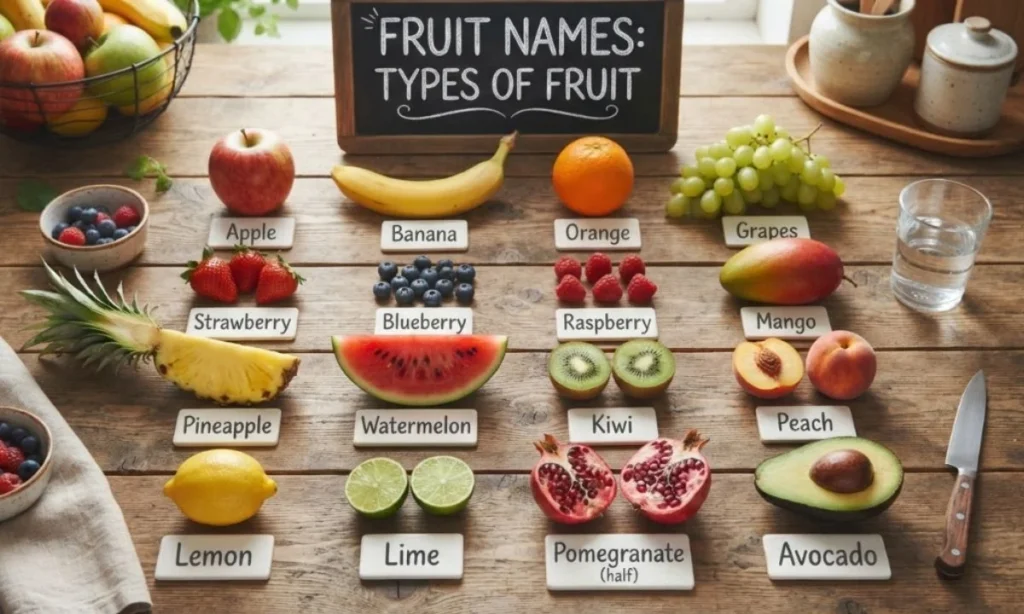
Fruits are one of nature’s most delightful gifts. They come in a stunning array of colours, shapes, sizes, and flavours, offering Fruit Names endless variety for our plates and palates. From the common apple in your lunchbox to the exotic durian that sparks fierce debate, the world of fruits is vast and fascinating. This comprehensive guide provides an extensive list of over 200 fruits, categorised by type, colour, and shape. It explains what fruits are used for, explores the different fruit categories, and highlights popular, tropical, exotic, and rare varieties from around the globe, complete with health benefits and descriptions to help you identify them.
What Are Fruits Used For?
Fruits are far more than just a sweet treat. They are a cornerstone of human nutrition and have played a vital role in cultures and economies worldwide for millennia. Their uses can be broadly categorized into several key areas.
Culinary Uses
Fresh Eating: The most straightforward and perhaps most enjoyable way to consume fruit is fresh. The natural sweetness and juiciness of fruits like apples, oranges, bananas, and berries make them a perfect, healthy snack. They provide essential hydration and a quick source of energy. As one source notes, round fruits “are common in many climates and are often juicy, sweet, or tangy, making them popular for fresh eating”.
Cooking and Baking: Fruits are incredibly versatile in the kitchen. They are used to make jams, jellies, and preserves, capturing their flavors for year-round enjoyment. In baking, fruits like apples (for pies), bananas (for bread), and berries (for muffins) are indispensable. Savory dishes also benefit from fruits. Jackfruit, for instance, is “gaining immense popularity in the West for its pork-like texture” and is used as a meat substitute in vegetarian dishes. Similarly, fruits like mango and pineapple are often used in chutneys, salsas, and marinades to add a sweet and tangy kick to meats and fish.
Beverages: Fruits are the foundation of countless drinks. From fresh fruit juices and smoothies to wines, ciders, and cocktails, fruits provide the essential flavors and natural sugars. Citrus fruits, in particular, are prized for their refreshing juices.
Nutritional and Medicinal Value
Essential Nutrients: Fruits are nutritional powerhouses. They are packed with vitamins, particularly Vitamin C, minerals like potassium, dietary fiber, and powerful antioxidants. For example, strawberries have “a very high amount of ascorbic acid; they have four times more ascorbate content than blueberries”.
Health Promotion: The compounds found in fruits protect against numerous diseases. Scientific studies have shown that consuming fruits can help reduce the risk of cardiovascular diseases, inflammatory disorders, type 2 diabetes, and cancer. The antioxidants in fruits, like anthocyanins and lycopene, also play a role in preventing aging and improving overall health. Ancient Roman physicians were aware of the medicinal properties of fruits, using them to treat gastrointestinal issues, among other ailments.
Pharmacological Potential: Beyond basic nutrition, fruits possess pharmacological potential, including neuroprotective, anti-diabetic, anti-cancerous, and anti-inflammatory effects. The flavanones found in citrus fruits, for example, show “good antioxidant and antimicrobial effects” and have been linked to managing diabetes.
Economic and Agricultural Uses
Crops and Trade: Fruits are a major agricultural product and a significant part of the global economy. Countries like Pakistan are famous for fruits like mangoes, which are a major export and a source of national pride. The cultivation and trade of fruits provide livelihoods for millions of farmers and workers worldwide.
Other Uses: Certain fruits have uses beyond eating. For example, the pseudostem of the banana plant is used for treating kidney stones, and the fruit’s flowers are used as a vegetable in some cultures.
Click Here To Read More:
Different Types of Fruit Names in English

To truly appreciate the world of fruit, it helps to understand the different categories they fall into. Here are some of the primary types of fruit, categorized botanically and by general characteristics.
Pomes
Pomes are fruits with a core containing several small seeds, surrounded by a thick, fleshy layer. Their skin is usually thin and edible.
Examples:
- Apple
- Pear
- Quince
Drupes (Stone Fruits)
Drupes are distinguished by a single hard pit or stone at their center, which contains the seed. They have a soft, fleshy exterior.
Examples:
- Peach
- Plum
- Cherry
- Apricot
- Mango
- Olive
Berries
Botanically, a berry is a fruit produced from the ovary of a single flower with seeds embedded in the flesh. However, in everyday language, this definition is more flexible.
Examples:
- Tomato
- Grapes
- Blueberry
- Raspberry
- Blackberry
- Cranberry
Citrus Fruits
These are a specific type of berry (hesperidium) known for their thick, aromatic rind and juicy, segmented interior. They are typically rich in Vitamin C.
Examples:
- Orange
- Lemon
- Lime
- Grapefruit
- Mandarin
Tropical Fruits
Tropical fruits are those grown in hot, humid climates between the Tropic of Cancer and the Tropic of Capricorn. They often have bold, intense flavors.
Examples:
- Mango
- Banana
- Pineapple
- Papaya
- Guava
Melons
Melons are a type of fruit from the gourd family, known for their thick rind and watery, sweet flesh. They are a popular summer treat.
Examples:
- Watermelon
- Cantaloupe
- Honeydew
All Types of Fruits List
Below is a comprehensive list of common and unique fruits you will find in this guide, many of which are illustrated in the sections that follow.
Common FruitsTropical FruitsCitrus FruitsBerriesStone FruitsAppleMangoOrangeStrawberryPeachBananaPapayaLemonBlueberryPlumOrangePineappleLimeRaspberryCherryStrawberryGuavaGrapefruitBlackberryApricotBlueberryPassion FruitMandarinCranberryNectarineGrapeDragon FruitTangerineGooseberryMangoWatermelonLycheePomeloElderberryOliveKiwiJackfruitKumquatMulberryAvocadoDurianYuzuBoysenberryPearRambutan
Tropical Fruit Names With Pictures
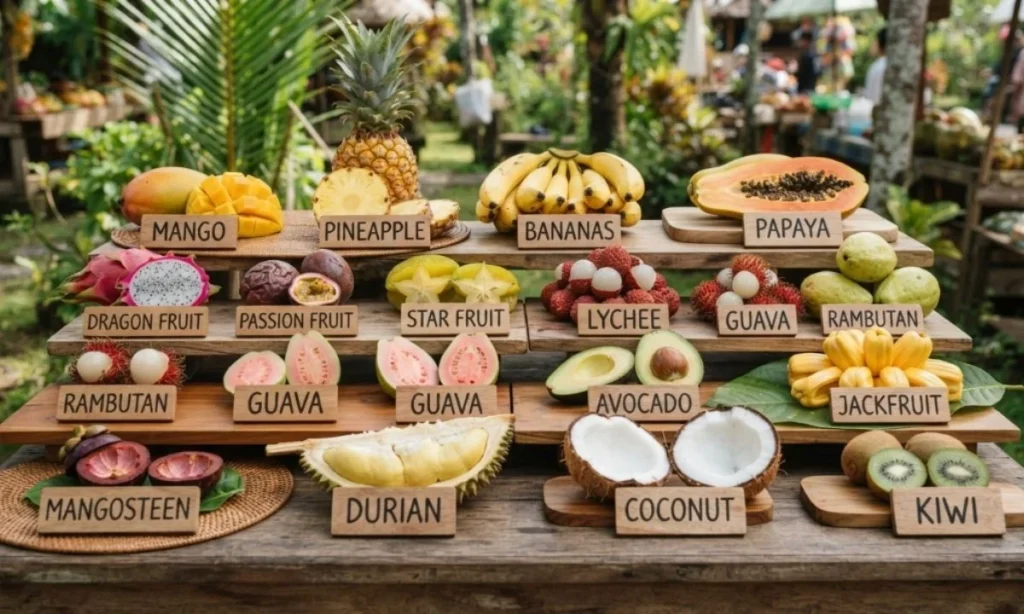
Tropical fruits are among the most flavorful and visually stunning in the world. Native to warm regions near the equator, they are often characterized by their bold colors, creamy textures, and exotic scents.
Mango: Known as the “king of fruits,” mangoes are prized for their sweet, rich flavor and juicy flesh. They are a favorite in many countries and a key ingredient in chutneys and desserts.
Papaya: This large, pear-shaped fruit has a sweet, melon-like flavor and is often eaten for breakfast. It is native to tropical America and is rich in enzymes that aid digestion.
Guava: With a unique, sweet and slightly tart flavor, guavas are enjoyed fresh or used to make juices and jams. They come in various varieties, including those with pink or white flesh.
Dragon Fruit (Pitaya): This visually striking fruit has a bright pink or yellow skin and a white or red flesh dotted with tiny black seeds. It has a mild, sweet taste and a refreshing, creamy texture.
Passion Fruit: Known for its intense, sweet-tart flavor and aromatic scent, passion fruit has a wrinkled, purple or yellow skin when ripe. The inside contains a jelly-like pulp filled with edible seeds.
Rambutan: Native to Southeast Asia, this fruit has a hairy, red skin that pops open to reveal a translucent, juicy flesh that tastes sweet and slightly sour. The name comes from the Malay word ‘rambut,’ meaning hair.
Longan: Also known as “dragon’s eye,” this small, brown fruit has a translucent flesh with a sweet and floral taste, similar to lychee.
Lychee: A small, bumpy, red fruit with a juicy, white flesh that is fragrant, floral, and sweet.
Mangosteen: Often called the “queen of fruits,” it has a thick, dark purple rind. Inside, the flesh is divided into white, juicy segments that are sweet and tangy, with a flavor reminiscent of peach, strawberry, and citrus.
Jackfruit: This is the largest tree fruit in the world, weighing up to 120 pounds. It has a fibrous, yellow flesh that is sweet when ripe. Unripe jackfruit is used as a meat substitute due to its “pork-like texture”. It is the national fruit of Bangladesh and Sri Lanka.
Durian: A fruit famous for its incredibly strong, pungent odor, often compared to rotting onions, which has led to it being banned on public transport in parts of Southeast Asia. Despite its smell, the flesh is creamy and sweet, with a flavor resembling caramel and vanilla.
Citrus Fruits Names and Pictures

Citrus fruits are grown in subtropical regions and are universally known for being a rich source of Vitamin C. They have a thick, aromatic rind and juicy, segmented interiors.
Orange: A round, bright orange fruit that is one of the most popular fruits worldwide. It is known for its sweet, juicy, and tangy flavor. Varieties like Navel and Valencia have distinct uses, with Valencia being a favorite for orange juice.
Lemon: A bright yellow, sour fruit that is a staple in cooking and drinks. It is used in everything from lemonade and salad dressings to cakes and sauces. The zest is commonly used to add aroma to dishes.
Lime: A small, green citrus fruit with a sour and slightly bitter flavor. It is an essential ingredient in many cuisines, especially in tacos, dips, and cocktails. Varieties like Key lime and Persian lime are popular for different culinary uses.
Grapefruit: A large, tangy citrus fruit with a yellow-orange skin and pink or white flesh. It is often eaten for breakfast or used in salads and sorbets.
Mandarin: A small, sweet citrus fruit that is easy to peel. Tangerines and clementines are popular varieties within this group.
Pomelo: A very large citrus fruit with a thick, green or yellow rind and a sweet, mild flavor. It is a key ancestor of many modern hybrids.
Kumquat: A tiny, oval-shaped fruit that is eaten whole, including its thin, sweet skin. The inside has a sour flesh, creating a unique sweet-and-sour taste.
Yuzu: A highly aromatic citrus fruit from Japan. It is very sour and is used primarily for its zest and juice in sauces, dressings, and desserts. Its flavor is complex and floral.
Blood Orange: An orange variety with a distinctive crimson-colored flesh due to the presence of anthocyanins. It has a slightly sweeter and more complex flavor than a regular orange.
Exotic Fruit Names From Around the World
The world is full of lesser-known fruits that are just as fascinating as the common ones. These exotic fruits often have unique appearances, textures, and flavors.
Buddha’s Hand: This is a fragrant citrus fruit with finger-like sections. It has no juice or pulp but is used to flavor dishes, make candy, and is often used as a religious offering in Buddhist temples.
Cherimoya (Custard Apple): Native to the West Indies and tropical Americas, this fruit has a creamy, custard-like flesh that is sweet and rich. It is sometimes considered one of the healthiest fruits due to its high nutrient content.
Sugar Apple (Sweetsop): Similar to the cherimoya, this fruit has a green, scaly skin and a sweet, creamy white flesh.
Carambola (Starfruit): Native to Southeast Asia, this fruit is known for its distinct five-pointed star shape when sliced. It has a juicy, tart flavor and is rich in antioxidants.
Horned Melon (Kiwano): A spiky, yellow-orange fruit native to Africa. It has a jelly-like flesh with a taste that is somewhat reminiscent of a cucumber or zucchini.
Jabuticaba: This unique Brazilian fruit grows directly on the trunk of its tree. The dark-purplish, berry-like fruit is eaten fresh or used to make jams and jellies.
Cashew Fruit: The cashew nut comes from the bottom of this pear-shaped fruit. The fruit itself is vibrant and edible, with a sweet and tangy flavor, used for snacking and in juices.
Tangelo: A hybrid citrus fruit, a cross between a tangerine and a pomelo. It has a sweet and sharp flavor with a loose, easy-to-peel skin .
Popular Fruits and Their Health Benefits

Beyond their delicious taste, popular fruits are celebrated for their significant health benefits. Eating a variety of fruits is crucial for maintaining good health and preventing disease.
Antioxidant Powerhouses
- Berries (Blueberries, Strawberries, Raspberries): Berries are loaded with antioxidants, which help protect the body from free radicals, reducing oxidative stress and the risk of chronic diseases. “Fruits like cherries, grapes, berries, oranges, apples, etc are important sources of natural antioxidants such as anti-aging phytochemicals”.
- Pomegranates: They are rich in antioxidants, and their extracts can have “antioxidant, anticarcinogenic, antimicrobial, antihypertensive, antidiabetic, hepatoprotective, neuroprotective, and immunomodulatory effects”.
Heart Health Support
- Apples and Pears: Apples are known to be beneficial in the prevention of cardiovascular diseases, diabetes, inflammation, and oncology. Pears also offer notable therapeutic properties.
- Citrus Fruits: Fruits like oranges and lemons contain flavonoids like hesperidin, which are used to treat cardiovascular diseases.
Digestive Health
- Prunes and Plums: Prunes are an excellent source of dietary antioxidants and are well-known as a natural remedy for constipation. Their fiber can lower plasma and liver cholesterol.
- Fiber-Rich Fruits: Most fruits provide dietary fiber, which aids in digestion and can help prevent gastrointestinal issues.
Specific Nutrients
- Strawberries: They have a remarkably high Vitamin C content, offering “four times more ascorbate content than blueberries,” and are rich in antioxidants that help lower the risk of cardiovascular disease.
- Lycopene-Rich Fruits: Fruits with red pigment like watermelon and pink grapefruit contain lycopene, “a plant nutrient having excellent antioxidant potential”.
Rare and Unusual Fruits With Names
For the adventurous foodie, the world of rare and unusual fruits offers a fantastic journey.
Finger Lime: This elongated, finger-shaped citrus fruit from Australia contains tiny, pearl-like vesicles that burst with a zesty, tangy flavor.
Hyuganatsu: A rare Japanese citrus fruit that is yellow and resembles a grapefruit. It has a complex flavor profile with floral notes and hints of honey, balanced with sweet and sour.
Falsa (Grewia): A small, dark purple berry native to South Asia. It has a sweet and sour flavor and is often used to make a refreshing chilled summer drink.
Jamun (Jambolan): This little fruit is native to Pakistan and is often eaten with a sprinkling of salt and pepper. It is known for its health benefits, including helping to control diabetes.
Xoconostle: A prickly fruit ubiquitous in Mexico, used to make candies, drinks, and spicy salsa for tacos.
Salak (Snake Fruit): This fruit has a brown, scaly skin and a sweet, honey-like taste. It is native to Indonesia.
Fruits by Color
Eating fruits of different colors ensures you get a wide range of nutrients. Each color group offers unique health benefits.
Red Fruits
Red fruits are often rich in lycopene and anthocyanins, powerful antioxidants. They are good for your heart.
Examples:
- Apple
- Strawberry
- Cherry
- Watermelon
- Pomegranate
- Raspberry
- Red Grapes
Blue and Purple Fruits
Blue and purple fruits are high in antioxidants that help fight disease.
Examples:
- Blueberry
- Blackberry
- Purple Grapes
- Plum
- Elderberry
- Fig
Green Fruits
Green fruits are excellent for the immune system and help keep bones strong.
Examples:
- Green Apple
- Kiwi
- Avocado
- Green Grapes
- Honeydew Melon
- Pear
- Gooseberry
Orange Fruits
Orange fruits are packed with Vitamin A, making them good for your eyes .
Examples:
- Orange
- Mango
- Papaya
- Peach
- Apricot
- Cantaloupe
Yellow Fruits
Yellow fruits contain nutrients that are good for your skin, nails, and muscles .
Examples:
- Banana
- Lemon
- Pineapple
- Yellow Apple
- Golden Kiwi
- Passion Fruit
White Fruits
White fruits often have pale interiors and sweet flavors; many are used in desserts.
Examples:
- Coconut
- White Peach
- Dragon Fruit (White variety)
- Banana (Inside)
Sweet Fruit Names
Some fruits are known for their intense, natural sweetness. Here are some of the sweetest fruits you can enjoy.
- Mango: Particularly the varieties found in South Asia, known for their rich, sugary flavor.
- Banana: A naturally sweet fruit that is a perfect energy source.
- Lychee: Known for its delicate, floral, and very sweet flesh.
- Grapes: The sugar content in grapes can be very high, making them a sweet snack.
- Cherries: These small stone fruits are known for their deep, sweet taste.
- Date: A tiny fruit with an intensely sweet and creamy taste.
- Pineapple: This tropical fruit is famous for its sweet and tangy flavor profile.
Fruit Names by Their Shapes
Fruits come in a wide variety of shapes. We often use these shapes to help identify and categorize them.
Round-Shaped Fruits
Round fruits are circular or nearly spherical. They are common in many climates and are often juicy and sweet.
Examples:
- Orange
- Apple
- Tomato
- Peach
- Plum
- Cherry
- Blueberry
- Fig
- Persimmon
Long/Elongated Fruits
Long fruits have an elongated or cylindrical shape. They are easy to slice and often used in smoothies, curries, and tropical dishes .
Examples:
- Banana
- Plantain
- Cucumber
- Longan (oval)
- Bitter Melon (Technically a fruit)
- Date (elongated)
Pear-Shaped Fruits
Examples:
- Pear
- Cashew Fruit
- Avocado
- Eggplant (Technically a berry)
Star-Shaped Fruits
Example:
- Carambola (Starfruit)
Horned/Spiky Fruits
Examples:
- Horned Melon (Kiwano)
- Rambutan (Hairy)
- Durian (Spiky)
- Jackfruit (Spiky)
FAQs
What are the 100 types of fruits?
There are hundreds of fruits, but 100 common ones include apples, bananas, oranges, mangoes, grapes, strawberries, watermelons, pineapples, and many more as listed throughout this guide.
What are the top fruits?
The most popular fruits typically include apples, bananas, oranges, strawberries, grapes, watermelons, mangoes, pineapples, and peaches.
Which is a sweet fruit?
Many fruits are sweet, but mangoes, bananas, lychees, grapes, cherries, and dates are particularly known for their high natural sugar content.
What are citrus fruits?
Citrus fruits are a type of fruit with thick, aromatic rinds and juicy, segmented flesh. They are a rich source of vitamin C and include oranges, lemons, limes, grapefruits, mandarins, and pomelos.
What is a rare fruit?
Rare fruits are those not commonly found in regular grocery stores. Examples include Buddha’s Hand, Cherimoya, Mangosteen, Jabuticaba, and Durian.
Conclusion
The world of fruits is an incredible tapestry of tastes, textures, colors, and health benefits. From the familiar sweetness of an apple to the pungent allure of a durian, there is a fruit to capture every palate. Understanding the different types, from citrus to tropical to exotic, not only enriches our culinary experiences but also enhances our ability to make informed and healthy choices. By “eating the rainbow” and incorporating a diverse variety of fruits into our diet, we can enjoy their delicious flavors and reap their remarkable health rewards.
