

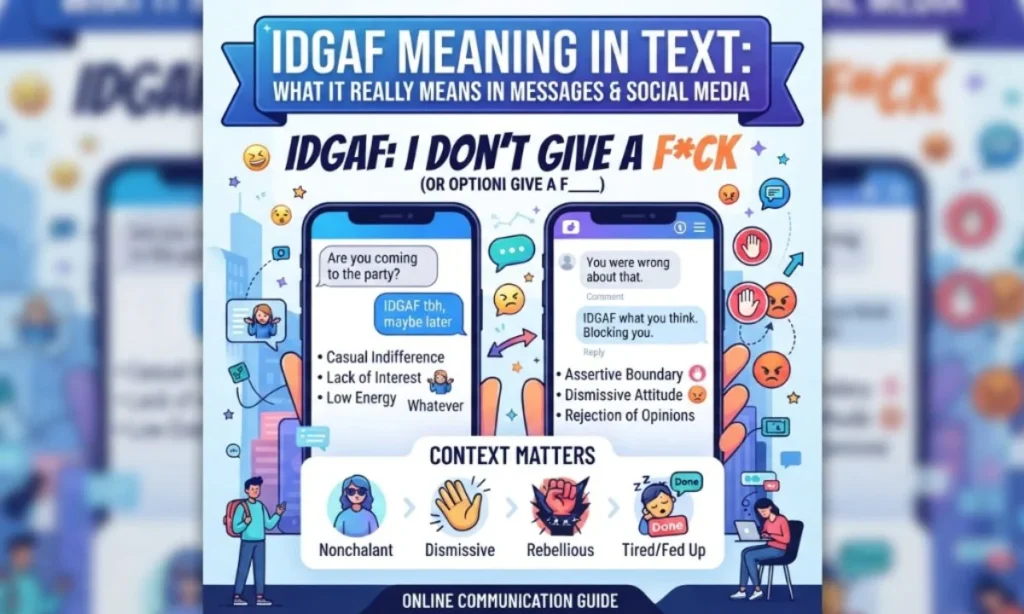
In the fast-paced world of digital communication, acronyms have become the universal shorthand of our generation. Among the countless abbreviations flooding our screens—from LOL to OMG—few carry the same punch, attitude, and cultural weight as IDGAF. You’ve likely seen it in Instagram captions, TikTok text overlays, Snapchat chats, or Twitter replies. But what does IDGAF actually mean, and why has it become so ubiquitous?
At its core, IDGAF stands for “I Don’t Give A F*”—a blunt, unapologetic expression of complete indifference. It is the digital equivalent of a verbal shrug, a declaration that you simply do not care about a person, situation, or opinion. However, reducing it to just four words misses the nuance. IDGAF has evolved into a cultural phenomenon—part rebellion, part boundary-setting, and part performance.
IDGAF Meaning in Text
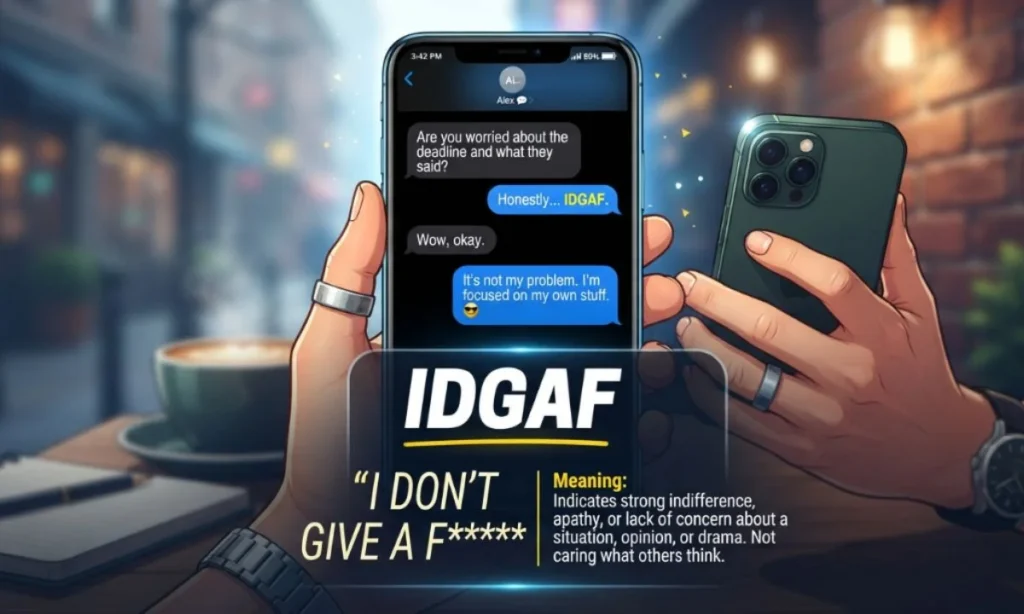
IDGAF stands for “I Don’t Give A F*.”** It is a blunt, informal acronym used to express complete indifference, apathy, or a lack of concern toward a person, situation, or opinion. In texting and social media, it signals that the sender does not care about the subject at hand—often with a touch of defiance or rebellious confidence.
Click Here To Read More:
Quick Summary
AspectDetailsAcronymIDGAFFull FormI Don’t Give A F***Primary MeaningComplete indifference or lack of concernToneBlunt, defiant, casual, or humorousCommon PlatformsWhatsApp, Instagram, TikTok, Snapchat, X (Twitter)Similar Terms DGAF, IDC, I don’t care, whateverProfessional UseRarely; considered inappropriate in formal settings
Background and Origin
The phrase “I don’t give a fuck” has been part of English slang for decades, but its acronym form, IDGAF, gained mainstream traction with the rise of SMS texting and early internet chat rooms in the late 1990s and early 2000s. It became shorthand for expressing apathy without typing out the entire curse phrase.
However, IDGAF’s true explosion in popularity came with hip-hop and pop culture. Artists like Azealia Banks released the track “212” featuring the acronym, and later Lil Wayne, Drake, and Selena Gomez (with “IDGAF”) cemented it in mainstream music. These cultural moments transitioned the acronym from niche texting slang to a globally recognized expression of unbothered confidence.
Today, IDGAF represents more than just indifference. It has evolved into an attitude and lifestyle statement—often associated with self-empowerment, mental health boundaries, and rejecting societal pressure.
Usage in Different Contexts
In Text Messages
In one-on-one texting, IDGAF is usually a direct response to drama, arguments, or unnecessary pressure. It is the digital equivalent of a verbal shrug.
- Example: “She’s mad you didn’t invite her.” → “IDGAF, she never shows up anyway.”
- Example: “Are you coming to the party?” → “IDGAF about parties right now. I’m staying in.”
Key nuance: In texts, IDGAF often carries the sender’s current emotional state—frustration, exhaustion, or assertive self-assurance. It is rarely neutral.
On Social Media
Social media is where IDGAF thrives. It appears in captions, comments, and even as hashtags (#IDGAF). Here, it is often performative—projecting a “cool” or “unbothered” persona.
- Instagram: Used in captions with confident selfies or lifestyle posts (“New haircut, new energy. IDGAF.”).
- X (Twitter): Used in rants or replies to express dismissal (“IDGAF about your hot take.”).
- TikTok: Appears in video text overlays, often paired with trending audio that conveys nonchalance.
Key nuance: On social media, IDGAF is often a mood rather than a literal statement. It signals alignment with a “carefree” aesthetic.
In Gaming
Gamers use IDGAF to brush off losses, toxic teammates, or meta changes. It adds a layer of psychological resilience—refusing to let a game affect one’s mood.
- Example: “You missed that shot hard.” → “IDGAF, we’re just messing around.”
- Example: “Your K/D is trash.” → “IDGAF about stats, I play for fun.”
Key nuance: In gaming, IDGAF serves as a verbal barrier against tilt (emotional frustration). It is a way to stay mentally loose.
In Everyday Conversations
In spoken conversations (rarely written out fully), people sometimes say “IDGAF” verbally for comedic or dramatic effect. It might be used among close friends sharing frustrations or joking about trivial matters.
- Example: “She doesn’t like your outfit.” → “IDGAF, I like it.”
Key nuance: In person, the tone (sarcastic, serious, or playful) heavily determines how IDGAF lands. Without context, it can sound rude.
In Professional Settings
IDGAF has no place in professional communication. Using it in emails, meetings, or formal documents can damage your credibility, appear immature, and strain work relationships. Even in casual office chats, it is risky.
- Exception: In extremely casual startups or creative teams, it might appear humorously among peers—but never with superiors or clients.
Key nuance: If you feel like using IDGAF at work, swap it for “I don’t have a strong opinion on that” or “I’m indifferent.”
Meaning Across Different Platforms
On WhatsApp, IDGAF appears in intimate one-on-one chats or small groups. It often follows a venting session or a dismissive response to gossip. Because WhatsApp is more private, IDGAF here tends to be more genuine and emotionally charged.
- Example: “My ex texted me.” → “IDGAF about what they have to say.”
Instagram users deploy IDGAF in captions, comments, and Stories. It often accompanies visually bold content—selfies, outfit posts, or travel shots. The acronym projects confidence and a curated “I don’t need validation” image.
- Example Caption: “IDGAF if it’s raining. Still taking this walk.”
TikTok
TikTok has embraced IDGAF as a transitional text overlay or green-screen text. It appears in skits, reaction videos, and “storytime” formats. Often, creators use it to mark the punchline of a story where they chose self-respect over pleasing others.
- Example: Video of someone walking away from a toxic situation with text: “Me: IDGAF anymore.”
Snapchat
Snapchat uses IDGAF in Snaps and Chat. Because Snaps are ephemeral, the acronym often feels low-stakes and playful. It can also appear in Bitmoji captions or as a sticker response.
- Example: “Are you mad at me?” → “IDGAF, I’m over it. Streak?”
X (Twitter)
Twitter threads and replies are fertile ground for IDGAF. It appears in debates, cancel-culture discussions, and clap-backs. Since Twitter’s public nature encourages hot takes, IDGAF is a frequent dismissal tool.
- Example: “People say this album is overrated.” → “IDGAF what they say, it’s a classic.”
Does IDGAF Mean Anything in Other Fields?
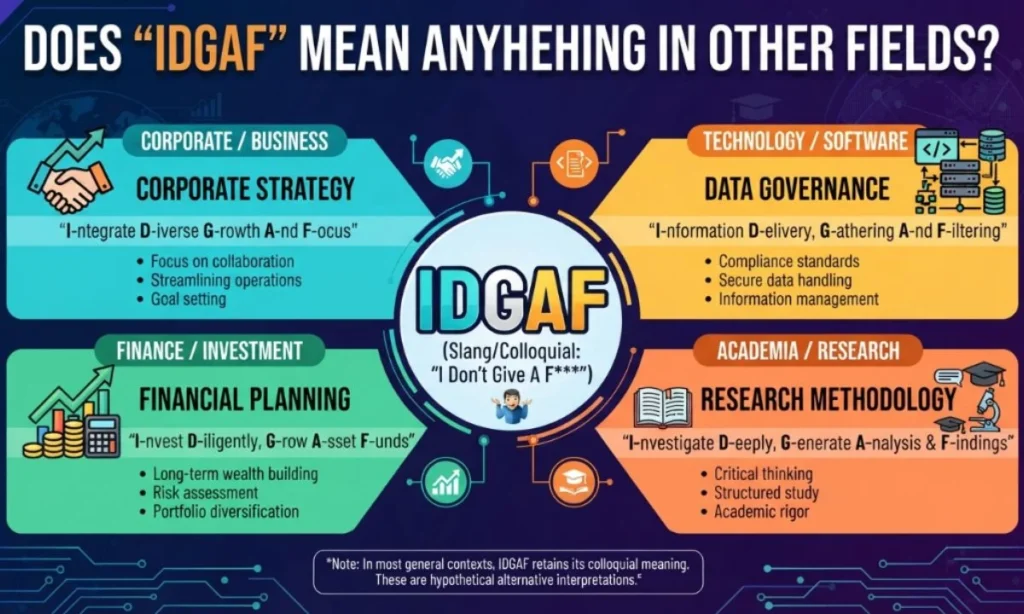
Outside of texting and social media, IDGAF rarely has meaningful professional or technical definitions. However, some playful backronyms (reverse acronyms) exist humorously:
Field | Playful Meaning: Comedy: “I Don’t Get Any Food” (used in hunger jokes)Gaming:“I Don’t Give A Fragment” (mocking loot drops); Office Humor: “I Definitely Get Annual Feedback” (ironic)
Important: None of these are standard. If someone uses IDGAF in a text, they mean the expletive—not a niche professional term.
Common Misconceptions and Mistakes
Many users misunderstand the weight and delivery of IDGAF. Here are the most frequent pitfalls:
Misconception: IDGAF is always aggressive. It can be playful, self-protective, or humorous depending on tone.IDGAF means permanent apathy. It is usually situational, not a lifelong personality trait. It’s interchangeable with “IDC.”IDC means “I don’t care” (milder). IDGAF is stronger and uses profanity. Using IDGAF makes you look cool. Overusing it can make you seem immature or emotionally closed off.IDGAF is appropriate in all chats. It is informal; using it with elders, bosses, or strangers can backfire.
Similar Terms and Alternatives
TermMeaningToneDGAFDon’t Give A F***Same as IDGAF, just without the “I”IDCI Don’t CareMilder, less profane IDMI Don’t Mind Neutral, agreeableWhateverDismissive indifferenceCan be rude or casual Not my problemClear boundary-settingDirect but professional enoughI’m indifferentFormal apathyProfessional and detached
When to use alternatives: If you are in a professional setting, use “I’m indifferent” or “I don’t have a strong preference.” If you are texting a friend casually, “IDC” may work, but IDGAF is reserved for moments when you want extra emphasis.
How to Respond to IDGAF
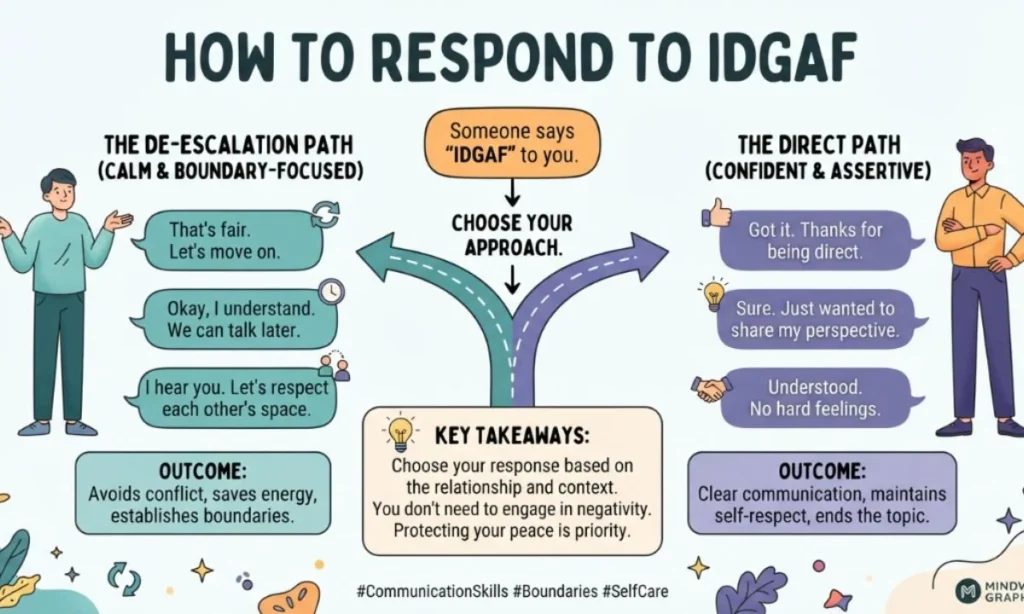
Receiving an IDGAF can feel dismissive, so your response depends on the context and your relationship with the sender.
Close friend venting
They use IDGAF about their ex or workplace drama.
- Best response: “Okay, fair. Wanna talk about something else?” (Validate their feeling, then pivot.)
Someone dismissing your valid concern
- Best response: “I get you don’t care, but I do. Can we talk about it?” (Assert your own feelings without matching their bluntness.)
Playful context (joke or meme)
- Best response: “😂 Okay, IDGAF either then.” (Match the playful energy.)
Toxic or aggressive context
- Best response: Disengage. “Okay, we’ll talk later.” (Protect your peace.)
Golden rule: Never escalate negativity. If someone sends IDGAF with anger, mirroring it only fuels conflict.
IDGAF vs Similar Expressions
ExpressionMeaningEmotional WeightBest Use CaseIDGAFI Don’t Give A F***Strong; emphatic indifferenceTexting, social media, ventingIDCI Don’t CareModerate; casual apathyEveryday chats, low-stakes topicsI’m indifferentNeutralMild; detached professionalismWork emails, formal discussionsNot my circusNot my concernPlayful; colloquialFriends, family gossipNo commentWithholding opinionGuarded; diplomaticPublic statements, boundaries
IDGAF is the strongest of the lot. Use it sparingly so that when you do use it, it carries real impact.
Relevance in Online Conversations and Dating Apps
On dating apps like Tinder, Bumble, and Hinge, IDGAF appears frequently in bios and chat exchanges.
In Bios:
Users write things like “IDGAF about your zodiac sign” or “Looking for fun, IDGAF about drama.” This signals a low-maintenance, no-drama personality.
In Chats:
If someone sends IDGAF early in a conversation, it can be a red flag for disinterest or rudeness. However, it may also be playful sarcasm.
Dating tip: If you match with someone who uses IDGAF repeatedly, assess whether they’re projecting confidence or emotional unavailability. Context matters.
Response sample: “You say IDGAF, but you matched with me, so you care a little, right? 😉”
Popularity and Trends Over Time
IDGAF has seen sustained growth since the early 2000s, with clear spikes linked to pop culture:
Year Event / TrendImpact2003Early SMS forums adopt IDGAF Niche internet slang2012Azealia Banks releases “212”Mainstream music exposure2017Selena Gomez drops “IDGAF” Billboard chart, global reach2020–present Mental health conversations normalize boundary-settingIDGAF becomes a self-care slogan
Google Trends data shows that IDGAF searches remain consistently high, with seasonal spikes during summer and award-show seasons—times when pop culture discourse intensifies.
Future outlook: IDGAF shows no signs of declining. As digital communication evolves, acronyms like this become cultural shorthand. Expect its usage to expand further into memes, merchandise, and even casual branding.
Frequently Asked Questions
What does IDGAF mean in texting?
IDGAF stands for “I Don’t Give A F***.” It means the sender is completely indifferent about the topic being discussed.
Is IDGAF a rude word?
It contains profanity, so it is informal and can be perceived as rude in professional or formal contexts. Among friends, it is usually accepted.
What is the difference between IDGAF and IDC?
IDC means “I Don’t Care,” which is milder. IDGAF is emphatic and uses profanity, expressing stronger indifference.
Can I use IDGAF in a professional email?
No. Avoid IDGAF in professional settings. Use formal alternatives like “I’m indifferent” or “I don’t have a strong opinion.”
How do you reply to someone who says IDGAF?
It depends on context. Validate their feeling if they’re venting, or disengage if they’re being aggressive. Playful replies work in casual banter.
Is IDGAF used only by younger generations?
No. While Gen Z and Millennials use it most, its pop culture prevalence means many adults recognize and use it casually.
Does IDGAF have a positive meaning?
Sometimes. In mental health contexts, it represents setting boundaries and not over-investing in others’ opinions.
Conclusion
IDGAF is far more than a casual acronym—it is a cultural marker of modern communication. From its gritty origins in hip-hop to its current status as a boundary-setting anthem, “I Don’t Give A F**”* encapsulates a generation’s desire to prioritize mental peace over public opinion.
Key takeaways:
- IDGAF means complete indifference but can be playful, protective, or aggressive based on tone and context.
- It is unsuitable for professional settings but thrives in casual texts and social media.
- Understanding how and when to use IDGAF—and how to respond to it—makes you a more effective digital communicator.
- Overusing IDGAF diminishes its impact; reserve it for moments when you truly mean it.
Ultimately, the power of IDGAF lies in its honesty. It cuts through pretense and says exactly what the sender feels. Whether you use it to deflect drama, assert confidence, or just make a joke, knowing its nuances helps you navigate the digital world with clarity and authenticity.
Next time you type IDGAF, ask yourself: Do I really not care? Or am I trying to protect myself? The answer might tell you more than the acronym ever could.
