

If you’ve ever paused mid-sentence wondering whether you need a rug or a rag, you’re not alone. These two words look almost identical, sound similar when spoken quickly, and both technically relate to fabric — but that’s where the similarity ends. Mixing them up isn’t just an awkward typo; it can completely change what you’re asking for, whether you’re shopping online, giving cleaning instructions, or writing a school assignment.
In this guide, you’ll get a complete, easy-to-understand breakdown of rug vs rag — their meanings, origins, grammar, pronunciation, real-life uses, and even how the word “rug” sneaks into slang. By the end, you’ll never second-guess yourself again.
Origin Of The Phrase (Rug vs Rag)
Both words have old linguistic roots, and understanding where they come from makes the difference much easier to remember.
Rug traces back to Scandinavian influence on English. Most language historians link it to the Old Norse word rogg, meaning a shaggy tuft or coarse hair. When it entered Middle English as rugge, it referred to a rough, heavy piece of fabric used as a covering — often a blanket or cloak worn for warmth. It wasn’t until much later, as home furnishing habits changed, that “rug” narrowed in meaning to describe the thick, decorative floor covering we recognize today.
Rag, on the other hand, comes from a similar Old Norse root — rögg : but took a very different path. In Middle English, ragge referred to a torn, tattered, or worn-out scrap of cloth. Unlike the rug, which evolved toward comfort and decoration, the rag stayed firmly tied to the idea of something used-up, torn, or repurposed : exactly how we use it today for cleaning and wiping.
So even though both words may share distant linguistic ancestry, centuries of everyday use pushed them toward completely different meanings.
Rug Meaning, Uses, and Examples
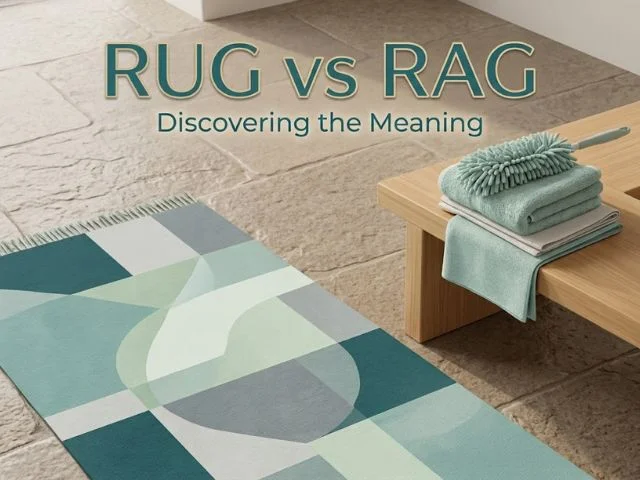
A rug is a piece of thick, woven fabric placed on a floor to add comfort, warmth, style, or protection. Rugs are usually a defined shape and size — rectangular, round, or oval — and they sit as a standalone piece rather than covering an entire floor.
Common uses of a rug:
- Adding warmth underfoot in living rooms and bedrooms
- Defining separate zones in open-plan homes
- Protecting hardwood or tile floors from scratches
- Enhancing interior design and home décor
- Reducing noise and echo in a room
Examples in a sentence:
- The blue rug in the living room ties the whole color scheme together.
- We bought a soft rug to place beside the bed.
- A vintage Persian rug can be a real investment piece.
Rag Meaning, Uses, and Examples
A rag is a piece of old, worn, or torn cloth, typically repurposed from clothing, towels, or other fabric that’s no longer usable in its original form. Rags are functional, not decorative, and their main job is cleaning, wiping, or handling messy tasks.
Common uses of a rag:
- Wiping spills and cleaning countertops
- Dusting furniture and shelves
- Polishing cars, shoes, or metal surfaces
- Handling grease, paint, or DIY project messes
- Padding or protecting items during moving or storage
Examples in a sentence:
- Grab a rag and wipe down the kitchen counter.
- His old T-shirt was cut up and turned into cleaning rags.
- The mechanic used a rag to wipe the oil off his hands.
Rug vs Rag Meaning
Read More:250+ Mass Noun Examples with Sentences and their Pictures
| Word | Core Meaning |
| Rug | A decorative floor covering used for comfort and style |
| Rag | A worn or torn piece of cloth used for cleaning |
If you remember nothing else from this article, remember this: a rug goes under your feet for comfort, while a rag goes in your hand for cleaning. That single distinction resolves almost every case of confusion.
How People Use Them (Rug vs Rag)

In everyday conversation, context almost always makes the meaning clear — but the words still trip people up, especially in writing, texting, or when English isn’t someone’s first language.
Here’s how native speakers typically use each word in daily life:
- Rug shows up in conversations about home décor, interior design, online furniture shopping, and room styling.
- Rag shows up in conversations about chores, cleaning supplies, garages, workshops, and DIY repairs.
A simple way people avoid mixing them up is by connecting each word with its typical location:
- Rug → living room, bedroom, hallway, office
- Rag → cleaning cupboard, garage, kitchen sink, workshop
Rug vs Rag: Key Differences Explained
Let’s break the differences down into a clear side-by-side comparison so there’s no ambiguity left.
| Feature | Rug | Rag |
| Definition | A woven floor covering for decoration and comfort | A torn or old piece of cloth used for cleaning |
| Primary purpose | Style, warmth, floor protection | Cleaning, wiping, polishing |
| Material condition | New, intact, purpose-made | Old, worn, or repurposed |
| Where it’s used | Living rooms, bedrooms, hallways | Kitchens, garages, workshops |
| Value | Can be expensive or decorative | Usually low-cost or free (recycled cloth) |
| Shape/Size | Defined, structured shapes | Irregular, torn pieces |
| Reusability | Long-term use, rarely discarded | Washed and reused until worn out completely |
Key takeaway: A rug is bought with intention and placed for appearance. A rag is created out of necessity and used until it’s no longer functional.
Rug vs Rag in Everyday English
English is full of near-identical word pairs that differ by a single letter, and rug vs rag is one of the most common examples. Other pairs that cause similar confusion include:
- Bag vs Big
- Cat vs Cot
- Pin vs Pen
What makes rug vs rag particularly tricky is that both words:
- Are one syllable
- Relate to fabric or cloth
- Are common household terms
- Differ by a single vowel sound
Because the vowel difference is subtle in fast speech, many learners rely on context rather than sound alone to figure out which word is being used. If someone is talking about their living room, they almost certainly mean “rug.” If they’re talking about cleaning a spill, they mean “rag.”
Rug vs Rag: Grammar and Word Usage
Grammatically, both “rug” and “rag” are countable common nouns. Here’s how they behave in a sentence:
Singular and plural forms:
- Rug → Rugs (e.g., “The store sells handmade rugs.”)
- Rag → Rags (e.g., “She keeps a box of cleaning rags under the sink.”)
Common phrases and expressions:
- Sweep it under the rug : an idiom meaning to hide or ignore a problem instead of dealing with it.
- From rags to riches :an idiom describing someone who goes from poverty to wealth.
- Rag on someone : informal slang meaning to tease or criticize someone.
Notice how even idiomatic English keeps the two words in separate lanes — “rug” idioms relate to concealment or comfort, while “rag” idioms relate to poverty, wear, or teasing.
More About Rugs
Rugs come in far more variety than most people realize, and understanding the types can help when shopping or decorating.
Common types of rugs:
- Area rugs : Standalone rugs placed over a section of flooring
- Runner rugs : Long, narrow rugs used in hallways
- Shag rugs : Thick, plush rugs with long fibers
- Persian/Oriental rugs : Handwoven, often intricate and valuable
- Outdoor rugs : Weather-resistant rugs for patios and decks
- Rag rugs : Interestingly, these are rugs made from rags, where old fabric strips are braided or woven together into a decorative, eco-friendly floor covering
This last category — the rag rug — is a fascinating overlap between our two words. It proves that while “rug” and “rag” mean different things, they can still work together: old rags literally become new rugs through traditional weaving or braiding techniques.
Rugs are also sized differently depending on the room:
| Room | Typical Rug Size |
| Living room | 8×10 ft or larger |
| Bedroom | 5×8 ft to 9×12 ft |
| Hallway | Runner (2×6 ft to 2×10 ft) |
| Entryway | 3×5 ft |
Rag vs Rug Pronunciation
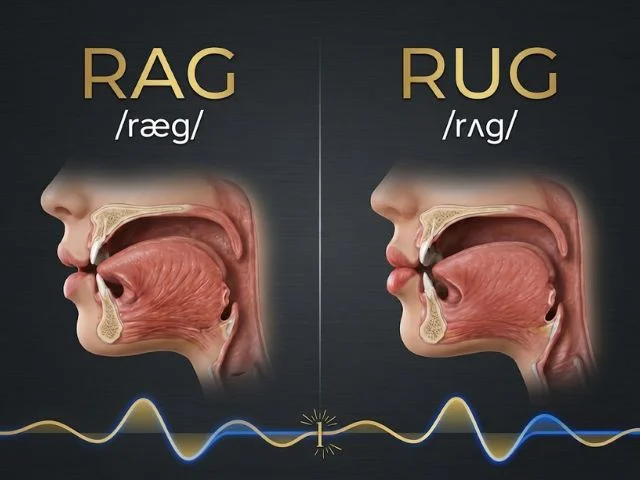
Pronunciation is where most of the confusion actually starts, especially for non-native English speakers.
- Rug is pronounced /rʌg/ — the “u” sounds like the “u” in “cup” or “bug.”
- Rag is pronounced /ræg/ — the “a” sounds like the “a” in “cat” or “bag.”
Quick pronunciation trick:
- Rug rhymes with bug, hug, and mug.
- Rag rhymes with bag, tag, and flag.
If you can remember that “rug” pairs with “hug” (something soft and comforting, like a rug underfoot) and “rag” pairs with “bag” (something you might toss old cloth into), the pronunciation and meaning become much easier to recall together.
Examples In A Sentence (Rug vs Rag)
Seeing both words used correctly, side by side, is one of the fastest ways to lock in the difference.
Rug examples:
- The dog loves napping on the rug by the fireplace.
- We’re shopping for a new rug to match our sofa.
- The hallway rug adds warmth to the entryway.
Rag examples:
- Use a damp rag to clean the windows.
- He tied a rag around his hand after the small cut.
- The garage is full of old rags used for car maintenance.
Sentences using both words together:
- After spilling coffee on the rug, she quickly grabbed a rag to clean it up.
- The rug looked brand new, but the rag she used to wipe it was falling apart.
Shoe Rug
A shoe rug (sometimes called a shoe mat or entryway rug) is a small, durable rug placed near the front door specifically to catch dirt, moisture, and debris from shoes before people walk further into the home. It’s a practical hybrid — decorative enough to fit the entryway’s style, but functional enough to protect the floors behind it.
Why people use a shoe rug:
- Prevents dirt and mud from spreading indoors
- Absorbs moisture from wet or snowy shoes
- Reduces slipping risk near entry points
- Adds a welcoming visual touch to the entryway
While a shoe rug is technically still a “rug” by definition, its job — trapping dirt and grime — sits closer to a rag’s cleaning purpose than a typical decorative rug. It’s a good reminder that the line between decoration and function can blur depending on where an item is placed.
RAG vs MCP

If you’ve landed here after searching in a tech or AI context, “RAG” might mean something completely different from the cleaning cloth we discussed earlier. In artificial intelligence, RAG stands for Retrieval-Augmented Generation, a technique where an AI model retrieves relevant information from an external knowledge source before generating a response, improving accuracy and reducing made-up answers.
MCP, or Model Context Protocol, is a different concept entirely. It’s a standard that allows AI models to connect with external tools, data sources, and applications in a structured, consistent way.
| Term | Full Form | Purpose |
| RAG | Retrieval-Augmented Generation | Improves AI answers by pulling in outside information before responding |
| MCP | Model Context Protocol | Standardizes how AI models connect to tools and data sources |
Both acronyms are unrelated to household rugs and rags — they simply share the same three or four letters. If you’re researching AI concepts, it’s worth double-checking which “RAG” a source is referring to, since the acronym overlap causes its own kind of confusion online.
Frequently Asked Questions
Is a rug the same as a carpet?
No. A rug is a smaller, movable floor covering, while a carpet is typically fixed wall-to-wall across an entire room.
Can a rag be made into a rug?
Yes. Old rags can be braided or woven together to create a decorative rag rug, a popular budget-friendly DIY project.
Why do people confuse rug and rag?
The words sound similar, differ by only one vowel, and both relate to fabric, making them easy to mix up in fast speech or casual writing.
Is “rug” ever used to describe hair?
Yes. In casual slang, “rug” can informally refer to a man’s hairpiece, wig, or toupee.
Can rugs be washed like rags?
Some rugs can be machine washed or professionally cleaned, but most require gentler care than a disposable cleaning rag.
What’s the plural of rug and rag?
The plural forms are simply “rugs” and “rags,” following standard English pluralization rules.
Does “sweep it under the rug” involve real rugs?
No, it’s an idiom meaning to hide a problem, not a literal instruction involving a physical rug.
Conclusion
At first glance, “rug” “rag” might look like near-twins separated by a single vowel, but their meanings couldn’t be more different. A rug is a decorative floor covering built for comfort, warmth, and style. A rag is a worn or torn piece of cloth built for cleaning, wiping, and everyday practical tasks.
Once you connect each word to its purpose — rug for decoration, rag for cleaning — the confusion disappears for good. Whether you’re shopping
tw for home décor, writing a school essay, or simply cleaning up a spill, you now have everything you need to use rug and rag correctly, confidently, and without a second thought.
