

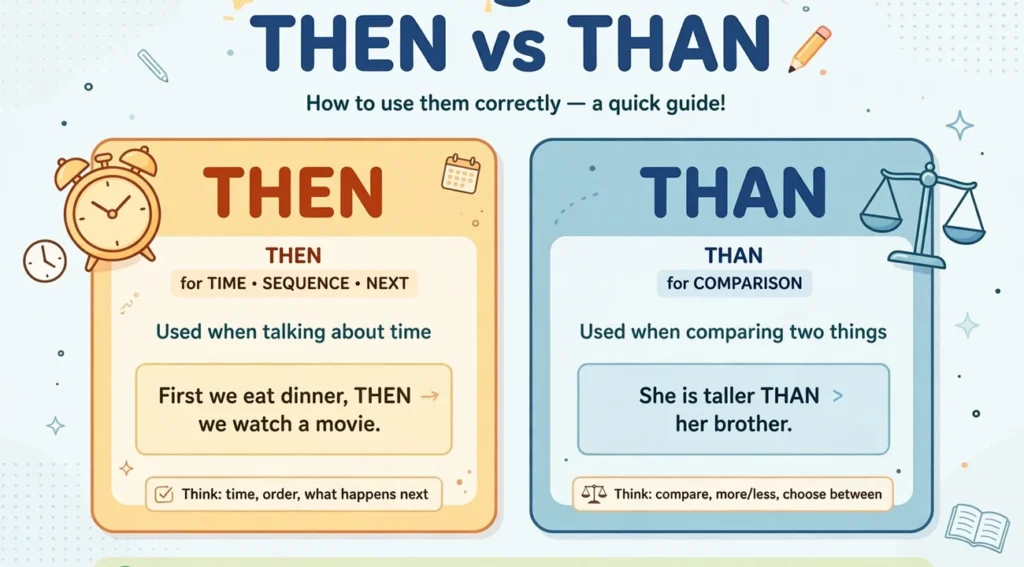
Which one is it — then or than? Try this quick test on any sentence: “I will call you ___ we finish.” If the missing word is about time or order, it is then; if it compares two things, it is than. They sound nearly the same and differ by a single letter — E for timE and A for compArison — yet that one letter changes the meaning of the whole sentence. That quick check settles it every time.
Here is the short answer. Then talks about time or order — what happens next. Than compares two things. “First I ate lunch, then I went for a walk.” “She is taller than her brother.” That is the whole then vs than difference in one line.
In this guide, you will learn what each word means, the 5 simple then vs than rules, a memory trick, 40 examples, the most common mistakes, and a quick quiz — and by the end, this question will never confuse you again.
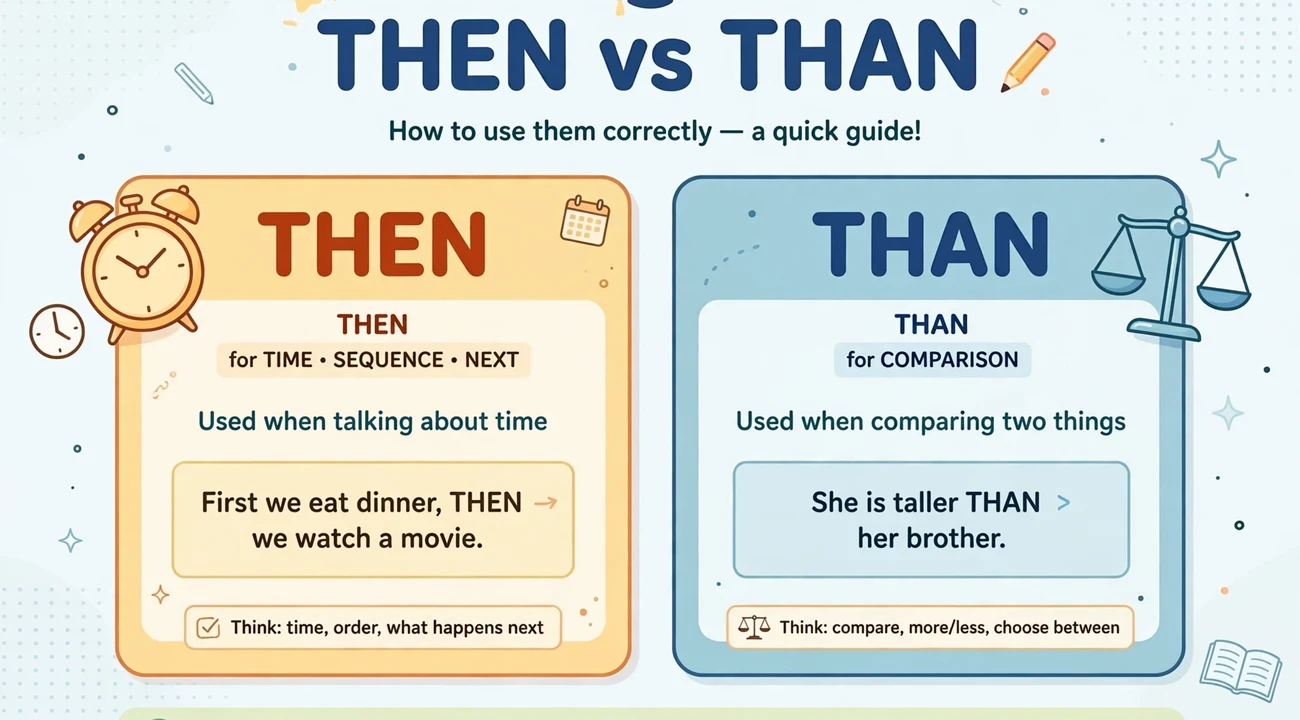
Then vs Than: The Quick Answer
See them side by side.
| Word | Meaning | Example |
|---|---|---|
| Then | At that time / next | First I ate, then I slept. |
| Than | Compared with | Tea is better than coffee. |
The golden then vs than rule: if you can use the word next, write then. If you can use the words compared with, write than.
What Does Then Mean?
Then is an adverb. It talks about time, order, or a result.
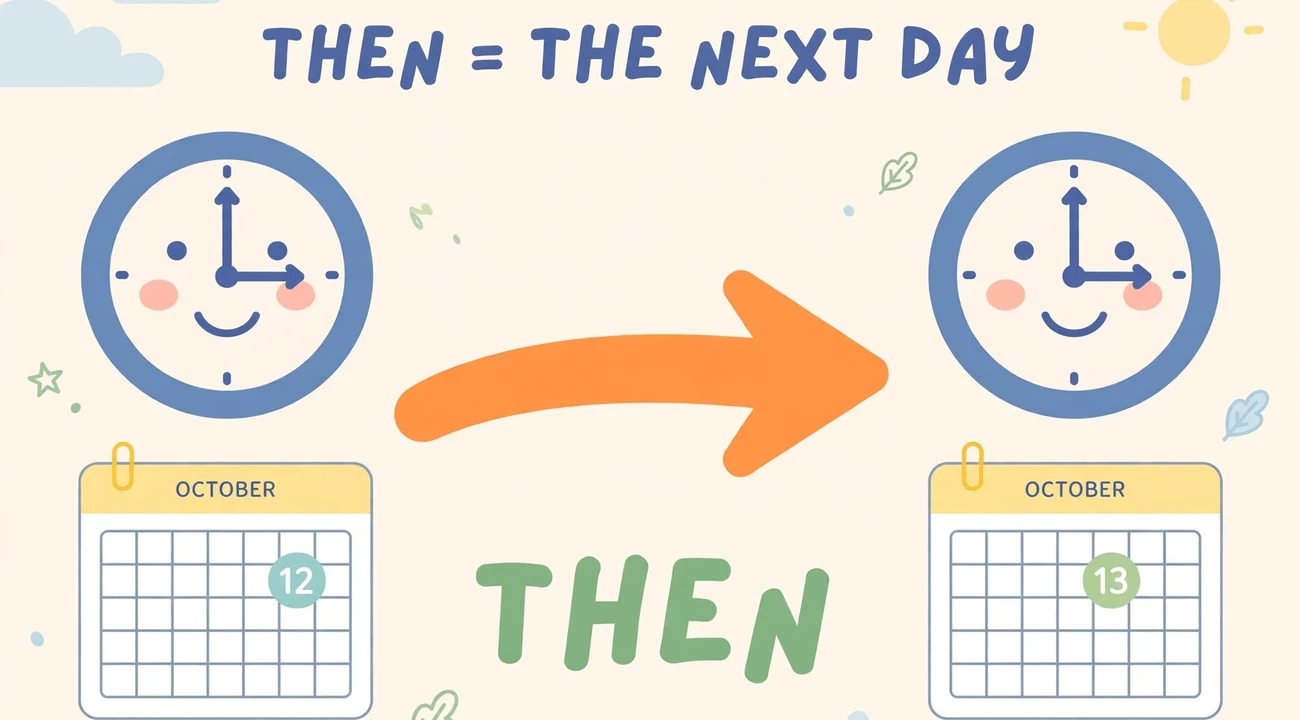
Use then when you mean:
- Next in a list: First wash your hands, then eat.
- After that: We played, then we slept.
- At that time: I was a child then.
- As a result: If you study, then you will pass.
- First finish your homework, then go outside to play.
- Want more help with then and other words like it? Read our Who vs Whom: Easy Guide with Examples.
What Does Than Mean?
Than is a conjunction. It joins two things so you can compare them.
Use than when you compare two people, places, or things:
- With -er words: She is taller than her brother.
- With more or less: This book is more fun than that one.
- With would rather: I would rather stay home than go out.
Then is the word for order and time. If the sentence is about what happens next, the answer is then.
For a quick check, open our 100 English Sentences for Daily Use page and try to spot the word then in five sentences.
10 Easy Examples of Then
First wash your hands, then eat your food.
We went to the park, then we came home.
Do your homework, then you can play.
She finished the book, then she slept.
I was a child then, and life was simple.
First we ate, then we left.
He smiled, then he opened the door.
We will go home, and then we will rest.
Study hard, then take the test.
If it rains, then we will stay at home.
10 Easy Examples of Than
She is taller than her brother.
This book is more fun than that one.
Ali is faster than Sara.
Tea is better than coffee.
Today is hotter than yesterday.
He is stronger than his friend.
This road is longer than the other one.
I like apples more than bananas.
She is older than me.
Reading is easier than writing.
The 5-Second Then vs Than Trick
Then has the letter E, just like timE. Use then for timE and ordEr.
Than has the letter A, just like compArison. Use than to compAre.
E = Then = Time. A = Than = Comparison. Say it three times, and you will never mix them up again.
- Then = timE = time or order.
- Than = compAre = comparing two things.
5 Simple Then vs Than Rules
These five rules cover almost every then vs than question you will ever see.
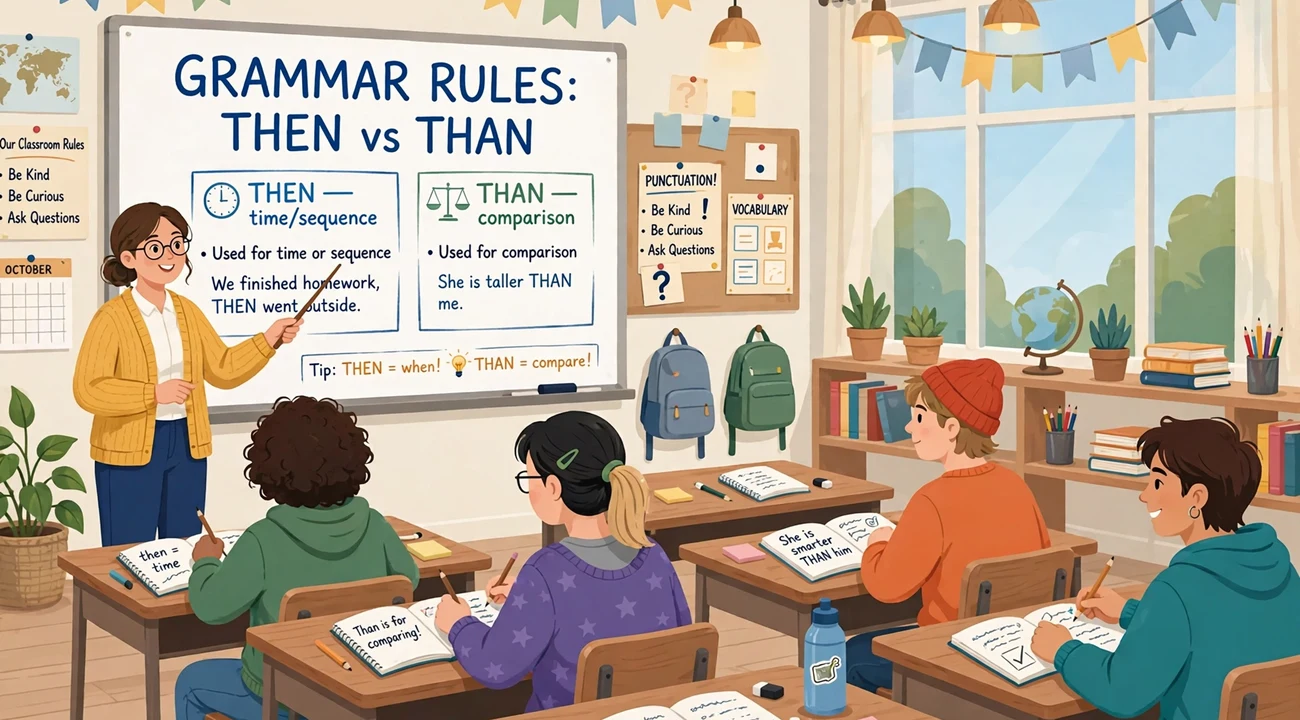
Rule 1: Then = Time or Order
Use then when something happens after something else.
We finished the class, then we went home.
First read the question, then write your answer.
Rule 2: Than = Comparing Two Things
Use than after words like better, bigger, faster, more, or less.
Example: This book is more fun than that one.
Rule 3: Then After If, Than After Comparatives
If you finish early, then you can leave.
He is stronger than his friend.
Rule 4: Then Can Start a Sentence, Than Cannot
Then he smiled and opened the door.
Do not start a sentence with than. It must come after a word it compares with.
Rule 5: Than Needs Two Things to Compare
Every than sentence has two sides.
Today is hotter than yesterday. (Today vs yesterday.)
Practise with daily grammar exercises.
Why the Then vs Than Mix-Up Happens
Both are short, both start with th, and end with n. Both are function words — words that help a sentence work, not words that name a thing or an action.
- Sound: Then and than sound almost the same when you speak fast.
- Spelling: They differ by only one letter — E vs A.
- Stress: In fast speech, both words are weak, so the ear cannot tell them apart.
Than is almost always followed by a person, a thing, or a clause you are comparing with. Then is almost always followed by a verb, a time word, or a new sentence.
Tip: Say the sentence aloud. If you can swap in next, write then. If you can swap in compared with, write than.
40 Then vs Than Examples
Here are 40 simple examples: 20 then and 20 than. Read them in order to see how the meanings change.
20 Sentences with Then
- First we ate, then we left.
- She finished the book, then she slept.
- We played, then we came home.
- Do your homework, then you can play.
- He smiled, then he opened the door.
- First wash your hands, then eat.
- We will go home, and then we will rest.
- Study hard, then take the test.
- If it rains, then we will stay at home.
- I was a child then, and life was simple.
- We finished the class, then we went home.
- First read the question, then write your answer.
- First I ate, then I slept.
- If you finish early, then you can leave.
- Then he smiled and opened the door.
- We went to the park, then we came home.
- First finish your homework, then go outside to play.
- We will leave at six, then we will eat.
- I will call you, then we can talk.
- First I will brush my teeth, then I will go to bed.
20 Sentences with Than
- She is taller than her brother.
- This book is more fun than that one.
- Ali is faster than Sara.
- Tea is better than coffee.
- Today is hotter than yesterday.
- He is stronger than his friend.
- This road is longer than the other one.
- I like apples more than bananas.
- She is older than me.
- Reading is easier than writing.
- She is smarter than her classmate.
- Winter is colder than summer.
- He runs faster than I do.
- This bag is heavier than that one.
- Her dress is prettier than mine.
- Maths is harder than English.
- I am taller than my sister.
- This pen is cheaper than that one.
- He is younger than his brother.
- Now you know the then vs than rule — well done!
Common Then vs Than Mistakes
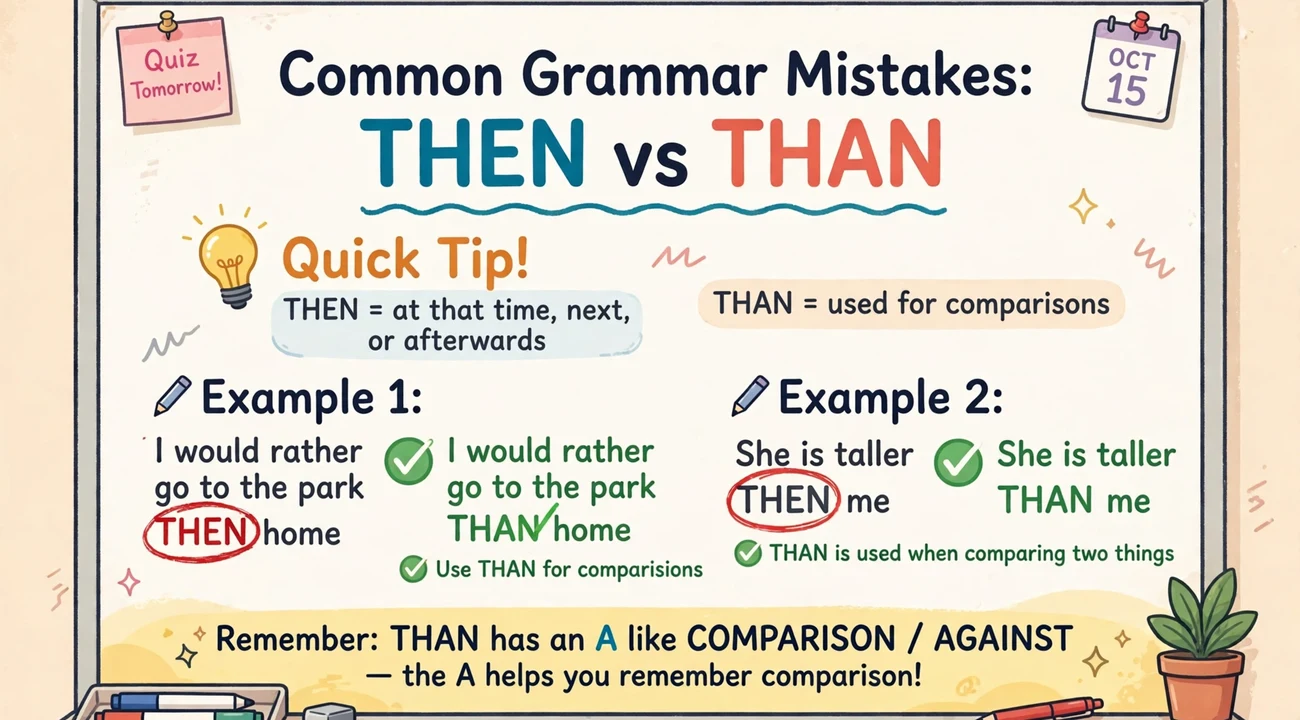
Mistake 1: Using “than” for time.
Wrong: “First eat, than go out.” Right: “First eat, then go out.” It is about order, not comparing.
Mistake 2: Using “then” for a comparison.
Wrong: “She is taller then her sister.” Right: “She is taller than her sister.” She is compared with her sister.
Mistake 3: Writing “then” when you mean “more than”.
Wrong: “I like tea more then coffee.” Right: “I like tea more than coffee.” “More” always pairs with than.
Mistake 4: Forgetting “than” after a comparative word.
Wrong: “This road is longer the other one.” Right: “This road is longer than the other one.” A comparative word needs than.
Mistake 5: Using “than” at the start of a sentence.
Wrong: “Than he came in and sat down.” Right: “Then he came in and sat down.” Than cannot start a sentence like this.
Mistake 6: Mixing “then” and “than” in one sentence.
Wrong: “He is older then me, than he left.” Right: “He is older than me. Then he left.” Use one word for each job.
Run the E and A test before you send a sentence, and these mistakes will stop.
Quick Quiz: Then or Than?
Fill in then or than in each sentence.
- First we ate, ______ we left.
- She is taller ______ her brother.
- I was a child ______, and life was simple.
- This book is more fun ______ that one.
- We finished the class, ______ we went home.
- Ali is faster ______ Sara.
- If it rains, ______ we will stay at home.
- We will leave at six, ______ we will eat.
Answers:
1. then (order)
2. than (comparison)
3. then (time)
4. than (comparison)
5. then (order)
6. than (comparison)
7. then (result)
8. then (order)
How did you do? 8/8 — excellent! 6–7 — very good. Fewer than 6 — read the trick once more.
Then vs Than: Quick Summary
| Word | Meaning | Example |
|---|---|---|
| Then | At that time / next | First I ate, then I slept. |
| Than | Compared with | Tea is better than coffee. |
The answer is simple: time and order take then, and comparison takes than.
Then vs Than in Real Sentences
Look at these short stories. Each one uses both words in the right place.
Ali finished his lunch, then he went to the park. The park was bigger than the one near his school. His mother said the new park was better than the old one, and Ali agreed — then he went home happy.
Sara studied hard, then she took the test. Her score was higher than last time. She was more careful than before, and then she smiled — she had done her best.
Then vs Than in Other Languages
Many learners mix up then and than because their own language uses one word for both ideas. In English, the two jobs are split: time uses then, and comparison uses than.
Some languages use one word where English uses two. If your language does that, this guide matters even more for you. Learn the E and A test, practise the examples, and the rule will soon feel natural.
FAQs About Then vs Than
What is the difference between then and than in simple words?
Then = time or order. Than = comparison. Think E for timE and A for compArison.
When should I use then?
Use then when you mean next, after that, or at that time. If you can swap in the word “next”, the answer is then.
When should I use than?
Use than when you compare two people, places, or things. If you can swap in the words “compared with”, the answer is than.
Is it “better then” or “better than”?
It is “better than“. Better is a comparative word, so it always pairs with than.
Is it “more then” or “more than”?
It is “more than“. More is also a comparative word, so it always pairs with than.
Can then start a sentence?
Yes. Then can start a sentence when it means next or after that. Example: “Then she smiled and went out.” Than cannot start a sentence in this way.
Want More Help with Then vs Than?
For more grammar basics, read the check and fix your English grammar guide.
For more grammar basics, read the Blue Book of Grammar and Punctuation guide.
Conclusion
Two words, one sound, two clear jobs: then tells you when, and than compares two things. Learn the E and A test, and you will never mix them up again.
Try the trick in your own writing today. Write five sentences with then and five with than, and check each one with the E and A test. Small daily practice like this turns a shaky rule into a habit, and good habits make your English clear and correct every single time.
