


There vs their vs they’re is three words in search of one sound. There points somewhere (“Put it there”) or says that something exists (“There is a cat”). Their says who owns it (“Their house”). They’re is two words in one — “they are” (“They’re late”). One little substitution test tells them apart: if “they are” fits, write they’re; if something belongs to them, write their; everything else is there.
Here is the short answer. There talks about a place, or starts a sentence about something that exists. Their shows possession — it means “belonging to them.” They’re is a short form of “they are.” That is the whole there vs their vs they’re difference in one line. The books are over there, the children lost their books, and they’re looking for them.
In this complete guide, you will learn what each word means, the 5 simple there vs their vs they’re rules, a 2-second test, 45 clear examples, the most common mistakes, and a quick quiz. By the end, the there vs their vs they’re question will never confuse you again.
There vs Their vs They’re: The Quick Answer
See them side by side:
| Word | Meaning | Example |
|---|---|---|
| There | A place, or “exists” | The book is over there. |
| Their | Belonging to them (possessive) | That is their house. |
| They’re | They are (contraction) | They’re my best friends. |
The golden there vs their vs they’re rule: If you can replace the word with “they are” and the sentence still makes sense, use they’re. If the word shows that something belongs to a group of people, use their. In every other case, use there.
What Does There Mean?

There has two main jobs. First, it talks about a place — the opposite of here. Second, it starts a sentence that says something exists, as in “There is a cat on the roof.”
- Put the bag over there.
- The school is there, near the park.
- There is a spider in the bath!
- There are ten students in the class.
If you enjoy word pairs like this one, you will also like our guide to Its vs It’s, another pair that confuses almost every English learner.
What Does Their Mean?
Their is a possessive word. It shows that something belongs to a group of people, animals, or things that you already mentioned. In the there vs their vs they’re group, their is the owner word — just like my, your, and his. It always comes before a noun.
- The children lost their bags.
- The players celebrated their win.
- I love their new house.
- The birds built their nests in the tree.
- What is their teacher’s name?
What Does They’re Mean?
They’re is a contraction — a short form made by joining two words and removing some letters. The apostrophe shows where the missing letters were. In the there vs their vs they’re group, they’re always means “they are.”
They’re = They + are
- They’re very kind. (= They are very kind.)
- They’re playing in the garden. (= They are playing in the garden.)
- I think they’re right. (= I think they are right.)
- They’re going to love this movie.
The 2-Second There vs Their vs They’re Test
Still not sure which word to use? Use this there vs their vs they’re test. It takes only two seconds.
Step 1: Replace the word with “they are” and read the sentence again. Step 2: If it makes sense, write they’re. If it sounds silly, ask: does something belong to them? If yes, write their. If no, write there.
Try the test on these examples:
- “They are over there.” ❌ Silly — so use there: “The books are over there.” ✅
- “They are house is big.” ❌ Silly, and the house belongs to them — so use their: “Their house is big.” ✅
- “They are my best friends.” ✅ Makes sense — so use they’re: “They’re my best friends.” ✅
This trick never fails. When you feel stuck, stop for two seconds and run this test.
5 Simple There vs Their vs They’re Rules

Rule 1: Use There for a Place or for “Exists”
When you point at a place, or say that something exists, use there.
- The keys are there, on the shelf.
- There is a rainbow in the sky.
Rule 2: Use Their for Possession
When something belongs to a group of people or things, use their with no apostrophe.
- The dogs wagged their tails.
- The students handed in their homework.
Rule 3: Use They’re for “They Are”
When you can expand the word into “they are,” use they’re with an apostrophe.
- They’re coming to the party. (= They are)
- They’re not ready yet. (= They are)
Rule 4: Their Always Comes Before a Noun
Their is a possessive adjective, so a noun must follow it: their house, their names, their car, their smiles. If no noun follows, the word cannot be their.
Rule 5: When in Doubt, Expand the Sentence
If a sentence still feels hard, write it in full. Instead of guessing, write “they are” in the sentence and read it aloud. Your ear will tell you the answer almost every time. Small rules like this become automatic when you practise them in daily grammar exercises.
Why the There vs Their vs They’re Mix-Up Happens
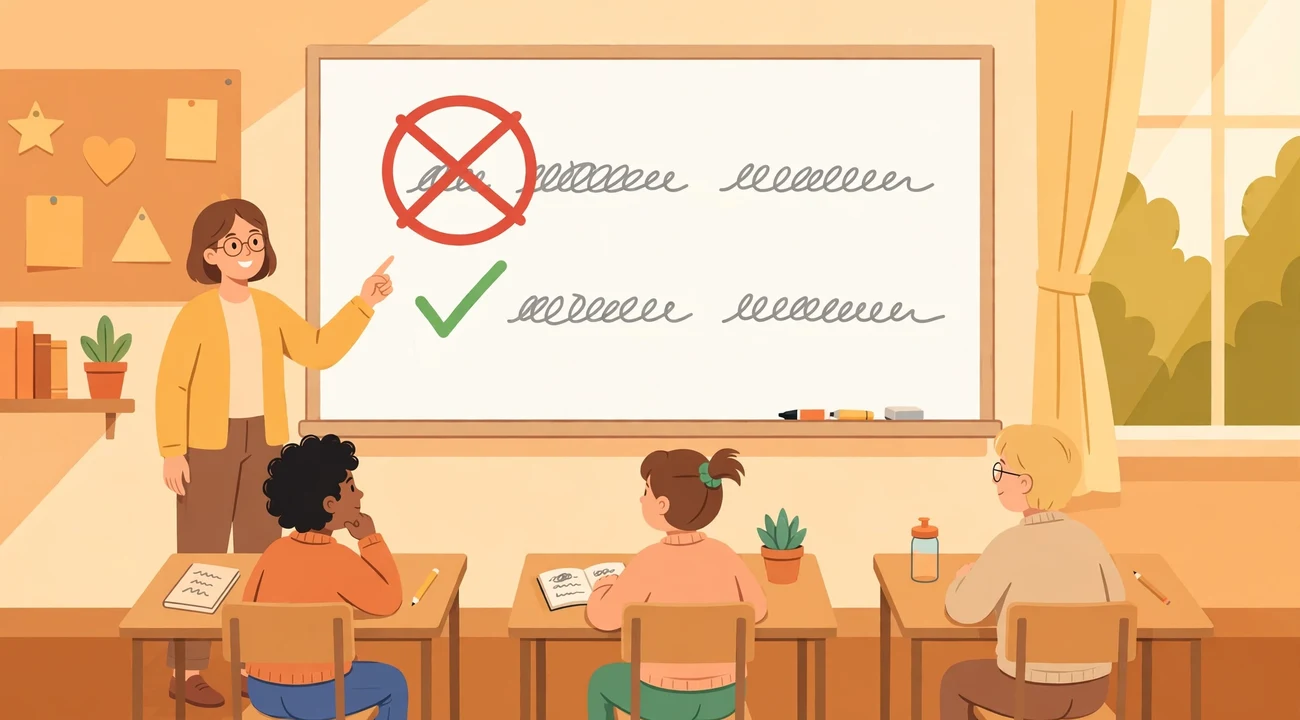
Why is there vs their vs they’re so confusing? Because the three words are homophones — they sound exactly the same when you say them. Your ear cannot tell them apart, so only spelling can. And with three words to choose from instead of two, the chance of a mistake is even higher.
There is a second reason too. In normal English, an apostrophe often shows possession: Sara’s book, the teacher’s desk. So learners naturally want to write they’re book for possession. But pronouns follow a different rule:
| Possessive word | Example | Contraction | Example |
|---|---|---|---|
| their | This is their book. | they’re = they are | They’re happy. |
| his | The coat is his. | he’s = he is | He’s happy. |
| its | The dog wagged its tail. | it’s = it is | It’s happy. |
In every row, the possessive word has no apostrophe, and the contraction has one. The there vs their vs they’re group follows exactly the same pattern. You can see the same idea in our Affect vs Effect guide.
There vs Their vs They’re Examples Side by Side
Read the groups together to train your eye.
- The shop is over there. / That is their shop. / They’re shopping now.
- There are five cats. / The cats found their food. / They’re eating now.
- Put it there. / It is their turn. / They’re ready to play.
45 There vs Their vs They’re Examples
Here are 45 simple examples. The first 15 use there, the next 15 use their, and the last 15 use they’re.
There (place / exists):
- The library is over there.
- There is a cat under the table.
- Put your shoes there, by the door.
- There are many stars in the sky tonight.
- The bus stop is there, across the road.
- There was a loud noise in the kitchen.
- Come and sit there, next to me.
- There is no milk left in the fridge.
- The garden is beautiful over there.
- There are two pens on the desk.
- Is anybody there?
- There was a rainbow after the rain.
- The keys are there, in my pocket.
- There is a new shop in our street.
- Stand there and wait for me.
Their (possession):
- The students opened their books.
- The children love their grandmother.
- The players wore their new shirts.
- The birds sang in their trees.
- I like their friendly smiles.
- The workers finished their lunch.
- The girls took their seats quietly.
- The cats cleaned their paws.
- The teachers gave their best.
- The team celebrated their victory.
- The farmers watered their fields.
- The friends shared their food.
- The dogs barked at their shadows.
- The nurses started their shift.
- The boys lost their way.
They’re (they are):
- They’re going to the park today.
- I think they’re happy with the result.
- They’re learning English very fast.
- They’re the best singers in the school.
- They’re not coming to the meeting.
- They’re playing football in the rain.
- Look! They’re dancing on the stage.
- They’re going to win this match.
- They’re my neighbours.
- They’re waiting for the bus.
- They’re too tired to walk home.
- They’re reading their favourite books.
- They’re going to love it.
- They’re the winners.
- They’re amazing — the there vs their vs they’re rule is simple now!
Common There vs Their vs They’re Mistakes
Even native speakers make these mistakes.
Mistake 1: Using their for a place. Wrong: “Put the bag over their.” Right: “Put the bag over there.” A place always takes there, never their.
Mistake 2: Using there for possession. Wrong: “The children lost there bags.” Right: “The children lost their bags.” The bags belong to the children, so the owner word is their.
Mistake 3: Writing “their going to” in a message. Wrong: “Their going to love it.” Right: “They’re going to love it.” The test: “they are going to love it” works, so use the contraction.
Mistake 4: Writing “there welcome” in a text. Wrong: “There welcome to stay.” Right: “They’re welcome to stay.” The test: “they are welcome” works, so use they’re.
If you want a full check of mistakes like these in your own writing, read our guide on how to check and fix your English grammar.
Quick Quiz: There, Their, or They’re?
Choose the correct word. Answers are at the end — no peeking!
- ___ going to be late for school.
- The books are over ___.
- ___ my favourite teachers.
- The players lost ___ match.
- I think ___ going to win the game.
- ___ house is near the river.
- ___ welcome to visit us anytime.
- ___ are ten apples in the basket.
Answers:
- They’re (They are going to be late)
- there (a place)
- They’re (They are my favourite teachers)
- their (the match belongs to the players)
- They’re (They are going to win)
- Their (the house belongs to them)
- They’re (They are welcome)
- There (saying that something exists)
How did you do? 8/8 — excellent! 6–7 — very good. Fewer than 6 — try the 2-second test once more.
There vs Their vs They’re: Quick Summary
| Point | There | Their | They’re |
|---|---|---|---|
| Meaning | A place / exists | Belonging to them | They are |
| Type | Adverb / starter | Possessive adjective | Contraction |
| Apostrophe | Never | Never | Always |
| Followed by | A verb, or a place | A noun | An adjective or verb |
| Test | Can you point at it? | Does it belong to them? | “They are” sounds right |
| Example | The book is over there. | That is their book. | They’re happy. |
If you are building your punctuation and grammar basics step by step, the Blue Book of Grammar and Punctuation is a trusted next read after this guide.
FAQs About There vs Their vs They’re
What is the difference between there, their, and they’re in simple words?
There talks about a place or says something exists. Their shows that something belongs to them. They’re means “they are.” That is the only rule you need.
How can I remember the there vs their vs they’re rule?
Use the 2-second test: replace the word with “they are.” If it makes sense, write they’re. If something belongs to them, write their. In every other case, write there. You can see the same pattern in our Who vs Whom guide.
Is “their going to school” correct?
No. The correct form is “They’re going to school,” because it means “they are going to school.” Writing “their going” is one of the most common there vs their vs they’re mistakes.
Can their ever mean “they are”?
No. Their only shows possession. It never means “they are.” If you mean “they are,” you must write they’re with an apostrophe.
Is they’re formal or informal?
They’re is a contraction, so it is slightly informal. In very formal writing, you can write “they are” in full. In essays, emails, blogs, and exams, they’re is perfectly fine.
Which one is used more often, there, their, or they’re?
There is used the most, because it starts so many sentences — “there is,” “there are,” “there was.”
Conclusion
This rule is smaller than it looks. Three words, three jobs: there points to a place or says something exists, their owns something, and they’re joins “they are” together. Remember the 2-second test and keep possessive words apostrophe-free.
Practise with the examples and quiz in this there vs their vs they’re guide, and soon you will choose the right word without even thinking. For more simple lessons, keep learning with GrammarLuck — grammar made simple.
